7 Tips for Online Shopping at US MART NEW YORK

7 Tips for Online Shopping at US MART NEW YORK
The laptop is open at the kitchen table. One tab shows delivery dates. Another shows a return window. Someone has pulled up a phone photo of the living room corner that still feels unfinished, and everyone leans in before the final click.
That is real online shopping — not just chasing a pretty thumbnail, but checking whether a store makes the decision easy. Right now, search results around major online retailers are heavy on brand pages, an official site, social presence, and even the occasional broken-page dead end. Helpful comparison advice is harder to find than it should be.
So you have to do what experienced shoppers do. Read the mix fast. Confirm the details. Price the shipment honestly. Then decide whether the item fits your room, your budget, and your tolerance for hassle.
#1 Start with the store's core mix
What it is
When you land on a retailer’s homepage, you should know within seconds what kind of shopping trip you are on. Is this a place for fashion, electronics, home goods, beauty items, gifts, or a little of everything? One top search result frames broad retailers as “Home Decor Store and More,” and that wording matters because it signals breadth rather than one narrow niche. Another top result is the official website, which tells you shoppers expect a direct web presence. Many people are also cross-checking the site against social inspiration and mobile shopping options.
Why it matters
A clear assortment saves you from browsing blind. If you need a housewarming gift, a new pair of sneakers, and a throw for the sofa, a store with obvious category structure will tell you right away whether it belongs in your shortlist. I look for clean category tiles, useful menu labels, and featured collections that reflect how people actually shop: apparel, accessories, electronics, home goods, beauty, sports, or seasonal items. If that structure is muddy, the rest of the experience usually follows the same pattern.
If you cannot tell what the store is best at in 10 seconds, keep browsing.
Quick example
Say you are furnishing a small apartment in Chicago and also need a quick birthday present. If the homepage immediately shows fashion, electronics, home essentials, and gifts, you can judge fit fast. If it opens with vague lifestyle imagery and no obvious path to shoes, bags, or home and kitchen items, you will waste time chasing a maybe. Good stores guide you early — and you feel the difference almost at once.
#2 Check sizes, materials, and care before you click
What it is
The product page should remove guesswork. For apparel, accessories, and home items, that means dimensions, material details, finish notes, and care instructions before you buy. A tray needs length and width. A necklace needs material details. A serving bowl needs dishwasher or microwave guidance. This is basic retail hygiene, but plenty of stores still bury it or skip it altogether.
When I shop online for a room or a wardrobe, I keep a tape measure nearby and compare the listing against real space and fit. A console table listed at 48 inches wide is very different from one at 60 inches. A cotton shirt that can be machine washed is a different commitment from a dry-clean-only garment. You want the page to answer those questions before the cart does.
Why it matters
Size mistakes are one of the easiest ways to create a return. The same goes for material surprises. A bag that looked matte may arrive glossy. A rug that seemed plush may actually be flatwoven. And a “natural fiber” basket may shed more than you expected. When stores spell out the dimensions and finish clearly, your risk drops fast.
No dimensions listed means no low-risk buy.
Quick example
Picture a dress or a dining table shown in the product photo. That image tells you almost nothing without numbers. If the listing says 71 inches long, mango wood veneer, wipe clean with a soft cloth, you can measure your room and decide with confidence. If it just says “large” and “easy care,” move on. Pretty copy does not help when the piece blocks a hallway by 9 inches.
| Item Type | Check First | Why You Care |
|---|---|---|
| Wall decor | Height, width, frame depth | Prevents scale mistakes on narrow walls |
| Textiles | Fiber content, washing method | Avoids scratchy texture and awkward upkeep |
| Kitchenware | Material, food-safe care notes | Keeps daily use simple and safe |
#3 Compare shipping speed and total landed cost
What it is

The real price is never just the sticker price. Your actual spend includes shipping, taxes, and, for international orders, possible duties, VAT, currency conversion, or regional service fees. That full number is the landed cost. If you are shopping from the USA into the UK, Europe, or Australia — or the other way around — this step matters even more because checkout totals can change sharply once location enters the equation.
Why it matters
Cheap products can become expensive very quickly. A $35 item feels like a bargain until shipping adds $16 and import charges tack on another $12. Speed matters, too. A store promising delivery in 3 to 5 days may be worth more to you than a slightly lower-priced seller quoting 14 to 21 days, especially for a gift or a room you are trying to finish before guests arrive.
| Cost Layer | Example Amount | What It Changes |
|---|---|---|
| Item price | $40 | Starting comparison point |
| Shipping | $18 | Raises true out-of-pocket cost |
| Taxes or import fees | $9 | Can erase a headline discount |
| Total landed cost | $67 | Better number for decision-making |
A cheap item can become expensive once shipping and duties appear.
Quick example
Imagine you are in London choosing between two identical-looking storage baskets. Store A lists one at $28 with international shipping calculated later. Store B lists one at $34 but shows duties, VAT, and delivery timing up front. Store B may win, even at a higher shelf price, because you know the full cost and the arrival date before you pay. Transparency beats suspense every time.
#4 Read returns, exchanges, and refund timing first
What it is
A return policy tells you how much risk the store expects you to carry. You want to know the return window, whether exchanges are allowed, who pays return shipping, how refunds are issued, and how long money takes to reappear after the item is received. This varies by category. Final-sale, clearance, personalized, or hygiene-related goods often come with tighter rules than standard stock.
One website error message simply said, “Something went wrong. Let’s get back on track.” That line was not meant as buying advice, of course, but it is a good reminder: verify support and policy pages before you trust a checkout. If the help center is hard to load, thin on answers, or confusing about deadlines, assume the return process may feel the same.
Why it matters
Returns turn online shopping from a gamble into a manageable trial. That is especially true for clothing, accessories, and home goods, where color, scale, and feel can shift once the item is in your actual space. A flexible 30-day return window with clear instructions gives you room to test the piece. A 7-day window, buyer-paid shipping, and vague refund timing make the same purchase feel far riskier.
If the return policy is hard to find, treat that as a warning sign.
Quick example
Take a ceramic table lamp ordered for a guest room. Store A allows returns within 30 days and emails a prepaid label. Store B allows returns within 10 days, excludes breakable items from easy exchanges, and refunds only after inspection. The lamp may look identical in the photo, but the purchase is not the same. Policy is part of the product.
#5 Use reviews and real photos to judge style
What it is
Brand photography sells a mood. Customer photos reveal reality. That is why reviews, user-uploaded images, and outside walkthrough videos can be so helpful. Many shoppers want visual context beyond polished product shots. They want to see how things read in normal light, on normal shelves, in normal homes.
Why it matters
Real photos are often better than star ratings alone. A five-star review that says “love it” tells you almost nothing. A customer image showing the item beside a standard sofa arm, dinner plate, or bedside table tells you scale. Another image under warm kitchen lighting tells you color. Texture, too, comes through differently in real-life shots — rattan looks rougher, brass looks duller, ivory sometimes leans beige.
If every review is vague, look for real photos instead of star ratings alone.
Quick example
Suppose you are debating a cream runner for a hallway. The studio image looks bright white and plush. Then you find three customer photos: one shows the runner reading oatmeal under daylight, one shows a flatter pile than expected, and one shows the edges curling slightly on hardwood. That does not automatically make it a bad buy. It makes it an informed one.
#6 Shop seasonally and watch for limited drops
What it is
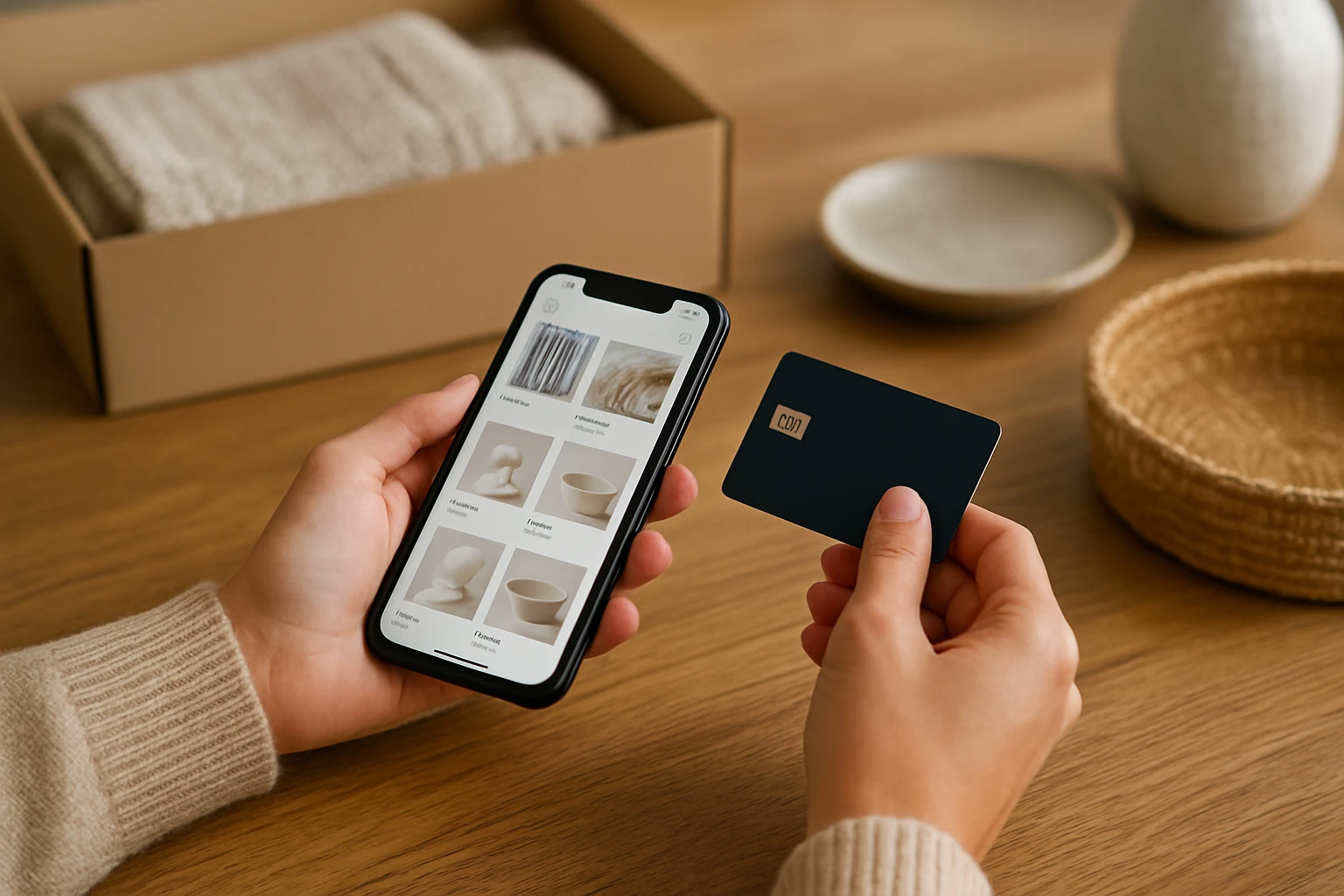
Some retailers run on rotating inventory rather than permanent, endlessly restocked collections. The phrase “New Finds” in a top result strongly suggests that discovery-driven model. That is common in decor, tabletop, gifting, apparel, accessories, and holiday merchandise.
Why it matters
If inventory is limited, timing changes the whole strategy. You do not always have a week to think it over. Seasonal pieces — spring planters, back-to-school accessories, harvest decor, holiday servingware — tend to move quickly. Limited batches can disappear just as fast, especially when the price point is accessible and the style feels current. Discovery retail rewards decisiveness, but only after you have done the basics: size, materials, shipping, and returns.
If you love it and it is limited, do not assume it will still be there tomorrow.
Quick example
You spot a set of velvet pillow covers in late October while planning for Thanksgiving guests. The listing shows low stock and a short delivery window. If the color, care instructions, and return rules all check out, that is the moment to act. Waiting until next Friday may mean the item vanishes, or the store swaps into a new drop that does not match your room at all.
#7 Match the purchase to the room, gift, or daily use
What it is
The smartest shoppers buy for a real use case. That sounds obvious, but it is surprisingly easy to forget once you start browsing styled images. Ask what the item has to do. Does it need to survive breakfast with two kids? Fit a narrow apartment entry? Work as a host gift that feels widely appealing? Gifts can be broader. Personal buys can be more specific. Daily-use items need a tougher standard than decorative ones.
Why it matters
A great thumbnail can still be a bad purchase. If a basket looks beautiful but has no handles, it may frustrate you in a laundry room. If a serving platter is striking but too delicate for frequent dishwasher use, it may become shelf decor when you needed weeknight function. Durability, convenience, and context should outrank fantasy. Your actual room is the judge — not the photo set.
Buy for the space or person you actually have, not the one in the photo.
Quick example
A marble-look tray might be perfect on a dresser where it will hold perfume and keys. The same tray might be a poor fit for a family coffee table where it will get bumped daily. Likewise, a neutral candle set can work as a safe housewarming gift, while a bold animal-print cushion is better saved for your own sofa if you know that is truly your taste.
How to choose the right option for online shopping at US MART NEW YORK
Style and selection
Start with the simplest question: does the store’s assortment actually match your taste and your task? If you need one accent piece, a curated niche shop may be enough. If you are buying for a wardrobe refresh, a gift, and a few practical basics in the same session, a broader multi-category retailer may save time and shipping. Look for stores that make selection obvious, not mysterious. Clear category depth is a feature, not a minor detail.
Delivery and returns
Next, test the logistics. Can the store ship to your region? Shoppers in the USA, UK, Europe, and Australia should confirm delivery zones before falling in love with anything. Then check the landed cost, delivery timing, and return path. The best retailer is not always the one with the flashiest homepage or even the lowest price. It is the one that combines understandable shipping, realistic timing, and a return process you can live with if the item misses the mark.
Choose the store that solves the most problems, not the one with the prettiest homepage.
Best-fit decision
When you are torn between two options, use a quick scorecard. I do this often with clients and at home. If a store wins on style but loses on delivery clarity, it may still be the wrong choice for an urgent purchase. If another store is slightly less inspiring but tells you the material, timeline, fees, and refund rules without a hunt, that is usually the safer buy.
| Question | Good Sign | Red Flag |
|---|---|---|
| Does the assortment fit your need fast? | Clear categories and obvious product mix | Vague branding and hard-to-scan navigation |
| Can you verify the item itself? | Dimensions, materials, care, and real photos | Missing specs or only polished studio shots |
| Do logistics feel low-risk? | Visible shipping costs, regional availability, easy returns | Hidden fees, unclear zones, or hard-to-find policy pages |
| Do you need it soon? | Reliable date range and in-stock status | Loose estimates and back-order ambiguity |
If you want a simple rule, make the store earn your trust in three areas: style fit, low-risk logistics, and timing. Miss one, and the purchase may still work. Miss two, and you are probably buying hope.
Good online shopping gets simple when the store is clear about what it sells, how each item works, and what happens after checkout.
That is why online shopping rewards careful shoppers more than impulsive ones. Before your next order, which check will save you the most money — dimensions, landed cost, or the return window?
Additional Resources
Explore these authoritative resources to dive deeper into home goods store online shopping.
Browse Curated Variety at US MART NEW YORK
Find online shopping for men’s, women’s, and kids’ fashion plus accessories, electronics, home items, beauty, and more, with shipping included, easy returns, and app discounts across the USA, UK, Europe, and Australia.
Shop Now- Editorial team


