Best Fashion and Home Picks Online in 2026

Best Fashion and Home Picks Online in 2026
A family in Melbourne has three browser tabs open before dinner. One shows a delivery date that slips by two weeks. Another hides the return window three clicks deep. The third looks cheap until the shipping fee appears at checkout.
If you regularly type “shop online” into Google while planning a move, refreshing a wardrobe, or sending a gift abroad, you already know the hard part is not finding pretty things. It is finding stores that can actually deliver the right mix of range, design, and reliability for your address. This guide is for shoppers in the USA, UK, Europe, and Australia who want clearer trade-offs before they commit to a cart.
Selection criteria for a great online store
We are not judging these stores by mood photos alone. We are judging them by how well they help you finish the job.
Watch This Helpful Video
To help you better understand shop home goods store online, we've included this informative video from Julie Sousa. It provides valuable insights and visual demonstrations that complement the written content.
Assortment breadth and category coverage
A strong online store should cover more than one category. Ideally, you can buy apparel, shoes, accessories, and a few home-related items in the same ecosystem. That does not mean every store must sell everything. It does mean the best options let you solve more than one shopping need without starting over elsewhere.
That matters in real life. If you are putting together a new wardrobe in Chicago, you might need a dress, sandals, a handbag, and a belt in one session. If a store only does tops well, it is not a complete answer. The broader the assortment, the less time you spend stitching together four different deliveries.
Shipping, returns, and regional availability
This is where glossy branding tends to crack. International shoppers in the USA, UK, Europe, and Australia need shipping and return policies that match their region, not just the retailer’s home market. A store may look perfect for a flat in Berlin or a house in Brisbane, then turn awkward once you learn it only offers free shipping domestically or makes bulky returns expensive.
For smaller accessories, a vague return process is annoying. For shoes or a suit, it can be costly. You want clear timing, clear fees, and some sense of what happens if the item arrives damaged. If duties, freight surcharges, or oversized-item restrictions show up late, the bargain disappears fast.
Rule of thumb: a stylish store is not a great pick if the checkout and delivery details are unclear in your country.
Price, materials, and design consistency
Low prices are not the same as good value. A jacket, handbag, or pair of shoes that needs replacing in six months was never cheap. When you compare stores, look at materials, construction, and whether the site maintains a consistent design language across categories. A coordinated store makes it easier to buy a belt, bag, and accessory that actually belong in the same look.
Membership and credit programs deserve the same skeptical look. They only make sense if you buy often enough to use the benefits. If you place one order a year, a membership can be dead weight. If you refresh wardrobes monthly, the math can change quickly.
| Filter | What good looks like | Why it matters |
|---|---|---|
| Assortment | Multiple categories such as apparel, shoes, accessories, and select home items | You can complete more of your list in one order |
| Shipping | Clear delivery estimates and region-specific policies | You avoid surprises at checkout |
| Returns | Easy-to-find windows, fees, and process details | Size or fit mistakes cost less to fix |
| Value | Fair pricing relative to materials and build | Cheap items do not become expensive replacements |
| Style consistency | Repeating colors, finishes, and silhouettes across categories | Your outfit or space looks intentional instead of accidental |
Best for broad selection and one-stop shopping
These are the retailers you open when you need to fill a cart, not just browse. Think dresses, jackets, shoes, bags, belts, and the random utility pieces you always forget until move-in week.
Best value usually comes from stores where the practical basics and the style pieces can ship together.
Wayfair
Summary: Wayfair is widely known for a massive home-furnishings assortment spanning furniture, decor, and storage. That scale is its main advantage. If you are looking for home-related products alongside fashion buys and do not want to jump between five specialty sites, few retailers make comparison shopping as fast. You can usually move from lighting to home accessories to other category needs without leaving the same search system.
Best for: Shoppers who want a broad online marketplace and do not mind comparing many options. Watch for: Variation. A giant assortment gives you choice, but it also means quality, finish, and return terms can differ by item. Measure carefully, read dimensions twice, and do not assume every product page behaves the same way.
Target
Summary: Target’s assortment commonly covers apparel, shoes, accessories, and everyday lifestyle items. It is often strongest when you need useful basics that still look current — casual outfits, seasonal accents, and simple add-ons you can grab quickly. The site is not built around luxury, but it is good at the useful middle ground.
Best for: Affordable refreshes, first-home basics, and practical add-ons you want to grab quickly. Watch for: Regional limits. Target makes the most sense for many US shoppers, while international buyers may find that availability, delivery options, or easy returns are less predictable depending on location.
IKEA
Summary: IKEA is known for flat-pack, self-assembly furniture and modern, affordable design. If your space is small, awkward, or storage-hungry, IKEA still earns a place on the shortlist. Its strength is not just price. It is the way furniture, organizers, textiles, and room solutions are designed to work together, especially in apartments and compact homes.
Best for: Small-space living, modular storage, and buyers who do not mind assembly in exchange for smarter pricing. Watch for: Flat-pack is efficient until you hate building it. Local stock can shift quickly, and bulky-item delivery deserves a close read before you commit to wardrobes, desks, or dining sets.
| Store | Why start here | Best for | Main caution |
|---|---|---|---|
| Wayfair | Huge range across furnishings and home-related items | One-cart shopping | Quality and return terms can vary |
| Target | Strong basics in apparel, accessories, and lifestyle goods | Affordable refreshes | Less useful in some regions outside the US |
| IKEA | Modern design with practical storage thinking | Small homes and budget-conscious setups | Assembly and local stock matter |
Best for design-led and premium upgrades
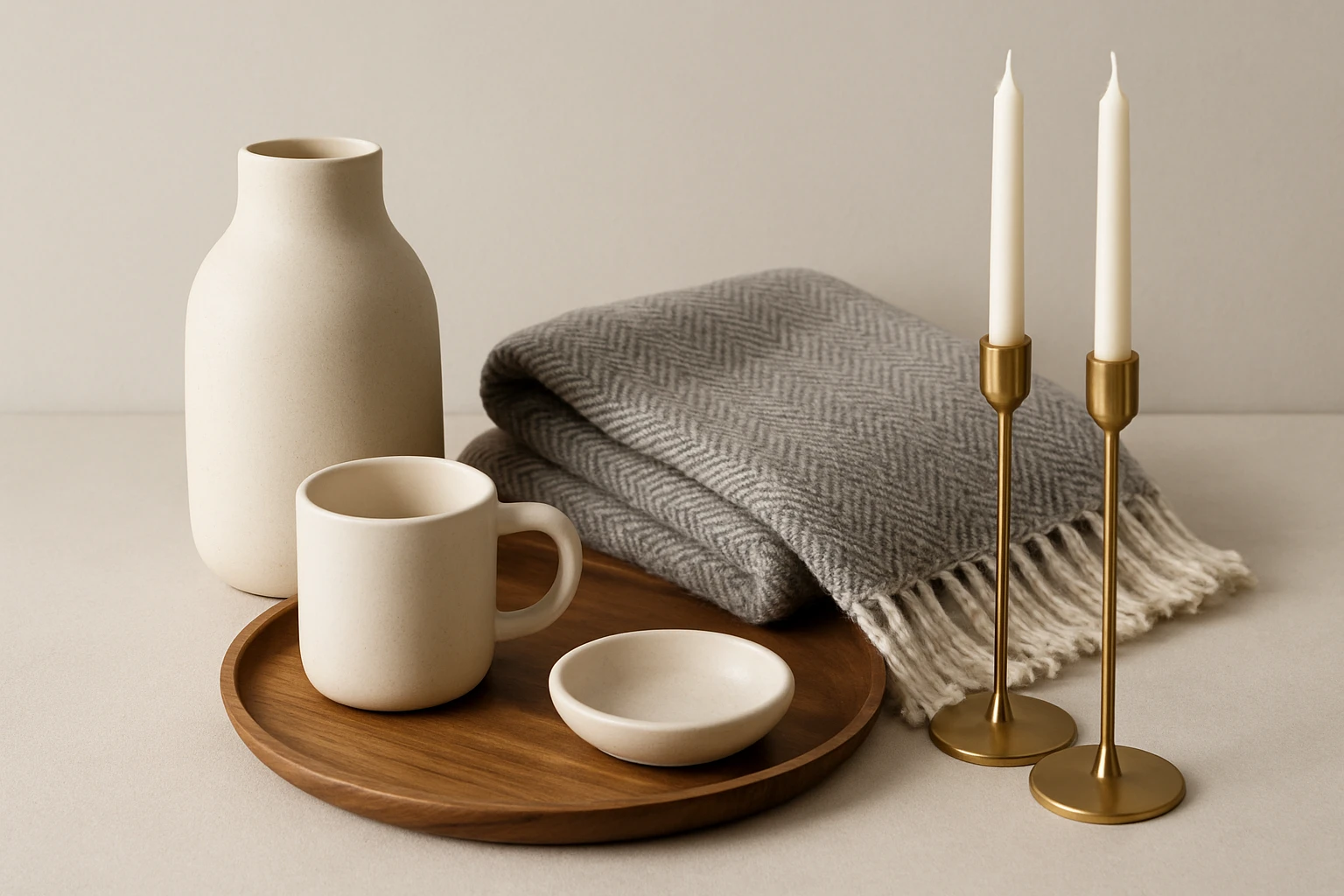
Some shoppers are not chasing the biggest cart. They are chasing a look that feels finished. These stores tend to reward you when you want coordination, not chaos.
If you want a look to feel finished faster, shop stores that repeat the same materials and colors across categories.
West Elm
Summary: West Elm is known for modern, design-forward furniture and decor. You go here when you want stronger point of view — cleaner silhouettes, more deliberate finishes, and a room that feels considered rather than assembled from leftovers. It is especially useful when you want modern living spaces to look warm instead of sterile.
Best for: Buyers aiming for a coordinated modern look with fewer mismatched experiments. Watch for: A higher spend per item, especially on furniture and statement lighting. This is the kind of store where it helps to decide your hero pieces first, then fill gaps elsewhere if needed.
Crate & Barrel
Summary: Crate & Barrel emphasizes tabletop, kitchen, and furniture with a contemporary look. That makes it particularly strong if your home life revolves around dining, entertaining, or upgrading everyday rituals — better glassware, sturdier cookware, cleaner-lined dining furniture. It often feels more polished than trendy, which helps purchases last visually.
Best for: Households that care about both furniture and the objects used on it — dishes, serving pieces, storage, and dining essentials. Watch for: Premium pricing can stack up quickly when you move from one category to five. A beautiful table setting is great, but it helps to know whether you are shopping for a single occasion or a long-term base collection.
Pottery Barn
Summary: Pottery Barn is commonly associated with classic home furnishings and seasonal decor. If you like layered rooms, upholstered comfort, and pieces that feel settled rather than sharp-edged, it can be a very reliable style anchor. The appeal is often strongest for bedrooms, living rooms, and those small finishing touches that make a house feel established.
Best for: Traditional or transitional homes, family spaces, and shoppers who want a softer, more classic look. Watch for: Bulk and styling intensity. Pottery Barn can look beautiful in a large room, but you should scale carefully in smaller apartments so the space does not feel visually heavy.
Best for eco-minded basics and minimalist households
If your ideal home looks calmer when there is less in it, this group makes more sense. These stores work best when you care about daily-use essentials, simple forms, and a lower-clutter approach to buying.
Membership math matters: a store can look cheap only if you actually use the discounts and credits.
Public Goods
Summary: Public Goods is the most detail-rich option in this list from the available source material. Public Goods says membership costs $65 per year, and members get 20% off everything, free shipping on all US orders, and a yearly $80 credit. The product lineup shown in the source includes household essentials and simple home items. That tells you exactly what kind of store it wants to be: repeat-use basics with a pared-back presentation.
Best for: US shoppers who buy household consumables and simple essentials often enough to justify the membership. Watch for: Frequency and geography. If you only place occasional orders, or you live outside the US, the benefits may feel less compelling. The offer looks strongest when your shopping rhythm matches the model.
Muji
Summary: Muji is known for minimalist design and simple household goods. You shop Muji when you want visual quiet — storage, small furniture, desk items, and home basics that avoid decoration for decoration’s sake. Few retailers are as consistent in tone from product to product.
Best for: Low-clutter homes, compact city living, and anyone who wants their office or living space to feel calmer. Watch for: Minimalism can read as plain if you prefer personality-first interiors. Also, stock and category depth may vary depending on your region, so not every market gets the same usefulness.
H&M Home
Summary: H&M Home offers affordable decorative home accessories and textiles. It is less about solving your whole house and more about quick visual improvement — cushion covers, throws, table linens, mirrors, candles, and small decor pieces that change the feel of a room without a major spend.
Best for: Fast style updates, seasonal swaps, and shoppers who want an inexpensive way to test a color or texture trend. Watch for: Depth. H&M Home is often strongest in soft goods and accents, not in heavier-duty categories like furniture systems or whole-home planning.
Best for unique, handmade, and giftable finds
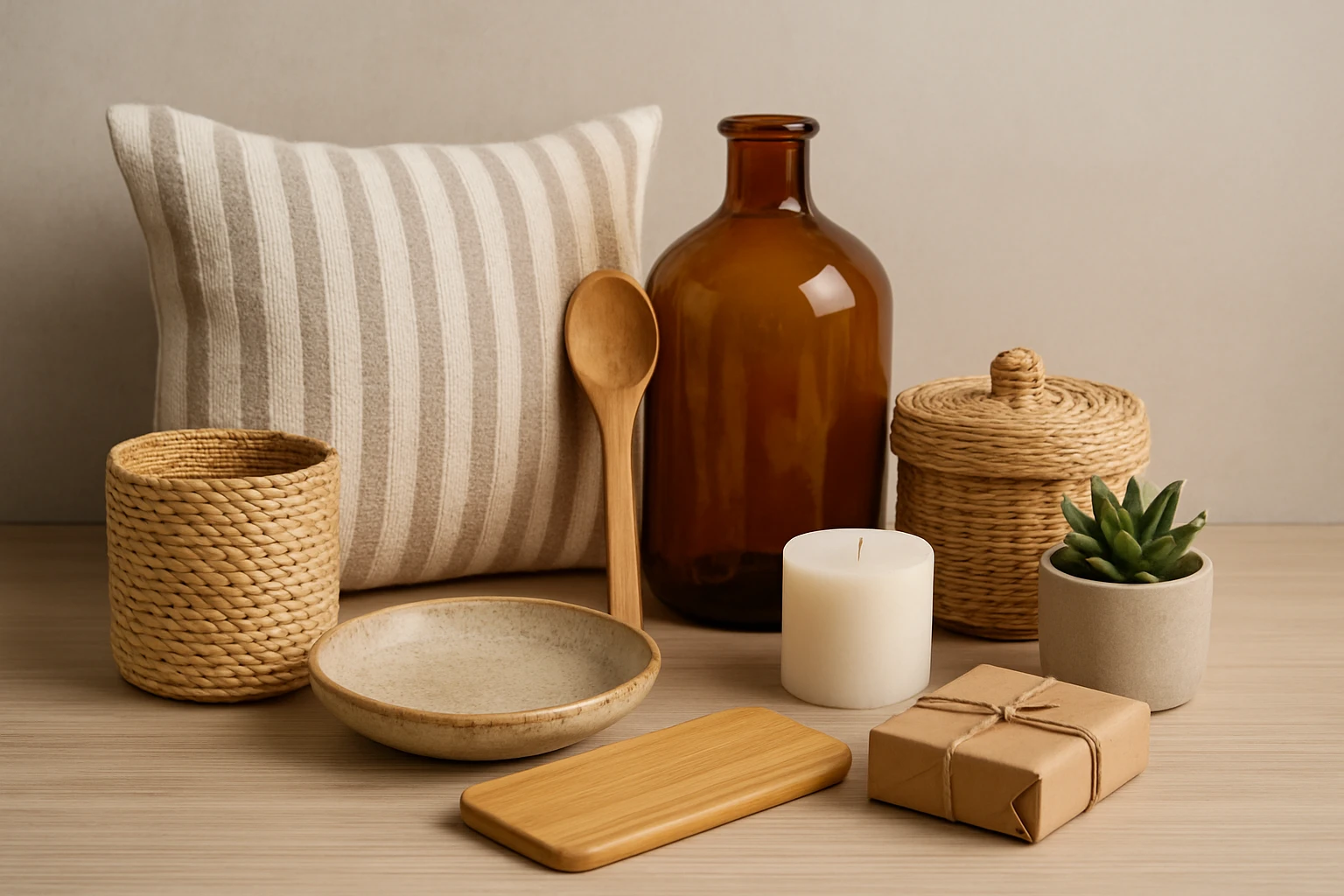
This is where you go when sameness becomes the problem. If your outfit or gift needs personality, broad mass-market convenience stops being the main goal.
For gifts, personality usually beats size — a handmade piece is often more memorable than another generic set.
Etsy
Summary: Etsy is a marketplace of independent sellers, which makes it strong for handmade and customizable finds. That matters when you want something more specific than “nice decor” — a personalized accessory, custom artwork, a ceramic mug from a small maker, or textile pieces that feel less standardized than chain retail.
Best for: Housewarming gifts, personalized items, wedding presents, and shoppers who care where an object came from. Watch for: Seller variation. Shipping times, return terms, and international delivery can differ widely. If you are ordering from Sydney for a gift in London, read each listing like a contract.
Anthropologie Home
Summary: Anthropologie Home is known for eclectic, decorative pieces and gift-friendly styling. Its strength is mood. You shop here when you want color, pattern, novelty, and objects that feel collected rather than purely functional. If your taste leans bohemian, romantic, or playful, it can be a useful source of punctuation marks for a room or outfit.
Best for: Statement decor, hostess gifts, decorative tabletop pieces, and shoppers who want a home to feel expressive. Watch for: Decorative temptation. A striking vase or mirror can carry a room, but this is not always the smartest first stop for basic utility purchases.
Society6
Summary: Society6 is known for artist-led prints and design products. That gives it a different job from the other stores here. It is not trying to furnish your whole home from scratch. It is trying to give walls, bedding, and small accessories a more individual visual voice.
Best for: Art prints, design-driven accents, and shoppers who want their space to reflect specific tastes rather than safe consensus. Watch for: As with many design-led marketplaces, product feel can vary by category. Check dimensions, material descriptions, and finish details before you assume a print or textile will land exactly as imagined.
How to shop online and choose the right option
Do not start with brand loyalty. Start with the job you need done.
Choose by room or category
If you are furnishing most of a room, start with stores that have category depth and a coherent style language. Wayfair, IKEA, West Elm, Crate & Barrel, and Pottery Barn make more sense for full-room planning than a decorative specialist does. If you only need a gift, a memorable accessory, or a single statement piece, Etsy, Society6, and Anthropologie Home can be smarter first clicks.
A simple test helps. Ask whether you need a room backbone or just personality. A strong wardrobe backbone is apparel, shoes, bags, and accessories. Personality is the statement piece that pulls the look together. Different stores handle those jobs better.
Choose by budget and buying frequency
Your spending pattern matters as much as your budget. For a one-time refresh, broad retailers and mid-priced basics often give you the cleanest value. For a steady stream of wardrobe and accessory purchases, a membership model can work — but only if you buy often enough to use it. Public Goods makes that trade-off unusually visible with its $65 yearly fee, 20% discount, free US shipping, and $80 annual credit.
If you are cost-sensitive, start with Target, IKEA, or H&M Home for the basics, then add one better piece where it counts. If you are building a wardrobe or living space you want to use for years, West Elm, Crate & Barrel, or Pottery Barn may justify the premium through stronger coordination and more durable visual choices.
Choose by shipping region and returns
Shoppers in the US, UK, Europe, and Australia should check regional shipping before getting attached to any item. This matters most with furniture, oversized decor, fragile tabletop, and anything customized. Cross-border shoppers should prioritize availability over brand familiarity. A beloved retailer is not helpful if the item cannot ship to your postcode or the return path is painful.
For smaller accessories, you can take more risk. For a sofa, dining table, or oversized mirror, you want boring clarity. Delivery windows, return fees, and region-specific stock tell you more about a retailer than its homepage ever will.
The right store is the one that fits your buying rhythm: one big room refresh or a steady stream of smaller upgrades.
| If your need looks like this | Start here | Why it works | What to double-check |
|---|---|---|---|
| Refresh a wardrobe or accessory collection | Target, H&M Home, or one of the fashion-led retailers below | Broad assortment and practical style coverage | Sizing, materials, and return terms |
| Upgrade a room on a tighter budget | IKEA or Wayfair | Good mix of basics and practical options | Regional availability and delivery costs |
| Create a polished, coordinated look | West Elm, Crate & Barrel, or Pottery Barn | Strong style consistency across categories | Premium pricing and shipping costs |
| Reorder simple essentials regularly | Public Goods | Membership structure favors repeat buyers | Whether your order volume justifies the fee |
| Buy a memorable gift | Etsy or Anthropologie Home | More personality and better gifting options | Seller-specific returns or decorative bias |
| Add art and visual character | Society6 | Artist-led products bring individuality | Print size, finish, and material details |
Shortlist the store that matches your room, budget, and region
Narrow to two backup options
This guide is meant to leave you with a sharper shortlist, not twelve open tabs and a headache.
Compare shipping and return costs
As you shop online, compare landed cost, delivery timing, and return rules on your top two picks — especially across the US, UK, Europe, and Australia.
Start with one category before buying everything
Begin with one category, then judge the experience by what actually arrives; which store earns your second order?
Additional Resources
Explore these authoritative resources to dive deeper into shop home goods store online.
Explore Style And Home With US MART NEW YORK
US MART NEW YORK combines online shopping for men’s, women’s, and kids’ fashion with select home items, no-cost delivery, easy returns, and app discounts for shoppers across four regions.
Browse Now- Editorial team


