Best Home Goods to Shop Online in 2026

Best Home Goods to Shop Online in 2026
On a Sunday night, one browser tab shows delivery dates, another shows a return window, and a third holds a cart total that is creeping past $200. A notebook sits beside the laptop with three lines written across the page: budget, room, destination.
Then the real comparison starts. A family flips between a fruit bowl in one tab, a throw pillow in another, and a decorative accent in a third before deciding what to order first. If that sounds familiar, you probably do not need more options. You need clearer categories, better signals, and a faster way to shop online without ending up with a cart full of things that do not quite belong together.
This guide is for shoppers who already buy fashion, gifts, and lifestyle items online and want the same confidence when buying from a multi-category retailer. Whether you are in New York, London, Berlin, or Melbourne, the same questions keep showing up: Which site is broad enough for a quick refresh? Which one is better for a home, kitchen, or garden order? Which one actually helps you find something with personality? That is where the distinctions matter.
Selection criteria
Prioritize stores with clear category range
Watch This Helpful Video
To help you better understand shop for home goods online, we've included this informative video from Simply R Home. It provides valuable insights and visual demonstrations that complement the written content.
The search results for this topic are mixed, and that is useful. You see broad retail signals from HomeGoods and At Home, then a design-editorial signal from Emily Henderson’s “13 Really Good Small Online Decor Shops To Make Your Home Unique (Plus, Three New Ones We Love!).” Right away, that tells you the market splits into two lanes: stores that help you cover a lot of ground quickly and shops that help you avoid a room that feels generic.
I always start with category clarity. If a site makes it easy to tell whether it does home, kitchen, garden, gifts, or lifestyle extras, you waste less time. The “Home Goods” general store excerpt is a good example of that clarity. Its navigation lists Home, Apparel, Jewelry, Kids, Found, Gifting, Sale, and Made in LA. That is not just broad. It is self-explanatory.
Favor sites that show prices up front
Price visibility changes how you shop. If a store shows enough of its assortment and enough actual numbers early, you can decide whether it belongs in your “maybe later” bucket or your “buy tonight” bucket. The visible Home Goods excerpt shows a wide range of products and price points. That is a big spread, but it is an honest one. You can see immediately that the store covers impulse gifts, design accents, and higher-ticket statement pieces.
That matters even more if you are shipping beyond one country. A $100 bowl can still make sense. A $100 bowl plus surprise duties, oversized handling, or a tough return policy can change the math fast. Up-front prices do not solve every problem, but they make your first pass smarter.
A strong online shortlist should let you buy basics and discover one unusual piece in the same sitting.
Separate broad retailers from unique, design-led shops
Not every great home store should do the same job. Broad retailers help when you need everyday goods, soft goods, and decorative accents without turning shopping into a research project. Design-led shops help when the room already works and now needs one piece that feels less predictable. If you blur those roles, you usually overspend on basics or underdeliver on character.
That is why this list treats “HomeGoods,” “At Home,” and smaller décor shops differently. One helps with range. One points to larger home categories and seasonal updates. The other exists to surface objects that do not feel mass-produced. Once you sort stores by role, the whole process gets easier.
| Option | What the excerpt signals | Price visibility | Best use |
|---|---|---|---|
| Home Goods general store | Home plus Apparel, Jewelry, Kids, Found, Gifting, Sale, Made in LA | High — visible examples across a wide range | Giftable, browseable carts with design-forward extras |
| HomeGoods | “Home Decor Store and More” | Limited in the excerpt | Broad, fast décor runs |
| At Home | “Home Decor, Seasonal Decor, & More” | Limited in the excerpt | Larger refreshes and seasonal updates |
| Small online decor shops | Explicitly framed as a route to a more unique home | Varies by shop | Originality, limited runs, character pieces |
#1 Home Goods General Store for Gifts and Statement Pieces
This is the most eclectic option in the current search mix. It reads less like a single-category home shop and more like the kind of general store you browse when you want a gift, an object for a shelf, and one elevated everyday item you did not know you were looking for until you saw it.
What the site sells
The category list does a lot of heavy lifting here: Home, Apparel, Jewelry, Kids, Found, Gifting, Sale, and Made in LA. That tells you immediately that this is not a narrow home-only destination. It is built for cross-category browsing, which can be a real advantage if you are putting together a hostess gift, a birthday package, or a cart that mixes home goods with small lifestyle extras.
From a shopper’s point of view, that breadth makes the store unusually flexible. You are not locked into one room or one task. You can buy for a kitchen shelf, a coffee table, a child’s corner, or a gift exchange without jumping between separate retail ecosystems.
Standout items from the excerpt
The excerpt shows a strong range of materials and price points. A fruit bowl appears at $100. A cutting board is listed at $150. A spoon lands much higher at $320. Then you see softer and sculptural accents like a checkered velvet pillow at $175 and a pottery vase at $500.
That is before you even get to the widest ends of the visible range: a candle at $14 and a floral artwork at $800. In practical terms, this means you can build a layered cart here. Start with something accessible, then decide whether you want one object with more presence.
If you want one cart to cover décor, gifts, and a few elevated everyday objects, this is the most varied stop in the SERP.
Best for giftable, design-forward carts
Best for: shoppers who want a cart that feels curated without becoming precious. If you are buying a wedding gift, a dinner-party thank-you, or one standout object for an entry console, this is the strongest fit in the current field.
Where it shines is in the mix. A fruit bowl, a cutting board, a candle, a book, and a small gift item can live in the same order without feeling random. Where it is less efficient is the “I need to outfit half a room tonight” mission. This is a browsing store first — and a very good one.
#2 HomeGoods for Broad, Fast Home-Decor Runs
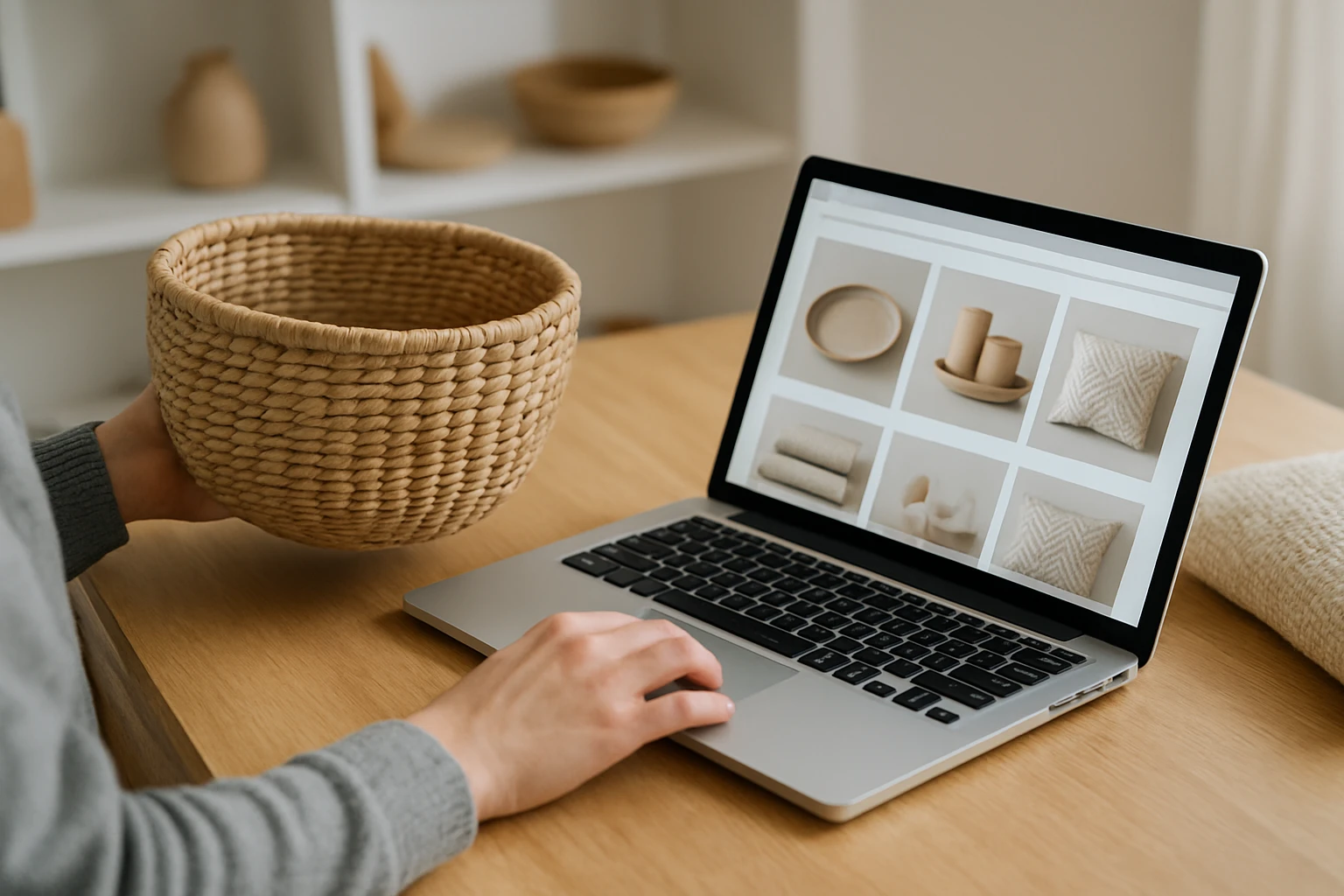
HomeGoods earns its place because the signal is simple. The search result itself calls it a “Home Decor Store and More,” which tells you almost everything you need to know about how to use it. When you want breadth, familiarity, and less decision fatigue, that is a strong proposition.
Why it belongs on the list
Not every shopping session should turn into a treasure hunt. Sometimes you just need a place that reads as broad, legible, and practical. “Home Decor Store and More” is exactly that kind of signal. The brand name also tells you this is a wide home-decor destination, not a niche artisan marketplace.
That distinction matters if you are refreshing a guest bedroom in a weekend or trying to pull together a living room before visitors arrive on Friday. You are probably not looking for a dissertation on provenance. You are looking for coverage.
What shoppers should expect
Expect the advantages of a broad retailer: easier category navigation, more familiar home-decor shopping patterns, and a less intimidating path from idea to checkout. This is where you look first when your list includes several ordinary-but-necessary items rather than one collectible piece.
There is also less risk of over-romanticizing the purchase. A basket should solve storage. A lamp should light the corner. A set of pillows should help the sofa feel finished. Broad retailers are good when function needs to stay in front of fantasy.
Best for quick room refreshes
Best for: fast refreshes, first-apartment basics, seasonal swaps, and the kind of shopping trip where you want to cover a lot of décor ground without opening 17 tabs. If your goal is to get a room from empty or unfinished to coherent, this is a sensible first stop.
What it is not best for is singularity. If you are chasing a ceramic piece nobody else in your group chat will have, you will likely want a smaller shop later in the process.
Best when the goal is to fill a room quickly, not to hunt for one-off collectible pieces.
#3 At Home for Seasonal and Larger Home Updates
At Home stands out for one reason: scope. The search title says “Home Decor, Furniture, & Holiday Decor,” and that extra category language changes the shopping strategy immediately. This is no longer just about accents. It is about broader home updates and seasonal finishing at the same time.
Why the category mix matters
Larger home updates change the size of the decision. Once a store clearly signals décor and seasonal décor together, you can start planning in layers instead of fragments. That is especially helpful when you are refreshing a full room rather than replacing one object.
It also reduces the classic mismatch problem. You buy an accent chair from one site, then try to patch in wall décor, storage, and seasonal detail somewhere else, and the whole project drifts. A wider category mix keeps your visual language steadier.
What to buy here first
Start with the anchor piece. If a site explicitly includes bigger home categories, let it solve the largest object first — the chair, bench, small table, or other room-shaping item. Then use the décor side of the assortment to build around it. That sequence keeps you from buying charming accessories for a room that still lacks structure.
The seasonal angle matters too. Seasonal shopping has deadlines, and sites that foreground holiday or seasonal décor tend to be easier for all-in-one updates. If you want your entry, dining area, or living room to feel finished for a specific moment in the calendar, this kind of retailer makes more sense than a highly edited boutique.
Best for room-wide updates
Best for: shoppers who need a bigger reset rather than a small flourish. Think living rooms that need a furniture piece and the styling around it, or guest spaces that need both function and seasonal warmth.
This is the practical pick when you want one checkout to cover the foundation and the finishing layer. It is less about surprise, more about completeness — and sometimes that is exactly the right brief.
Choose this when you need one checkout for a room anchor plus the finishing details that make a space feel complete.
#4 Small Online Decor Shops for Unique Finds
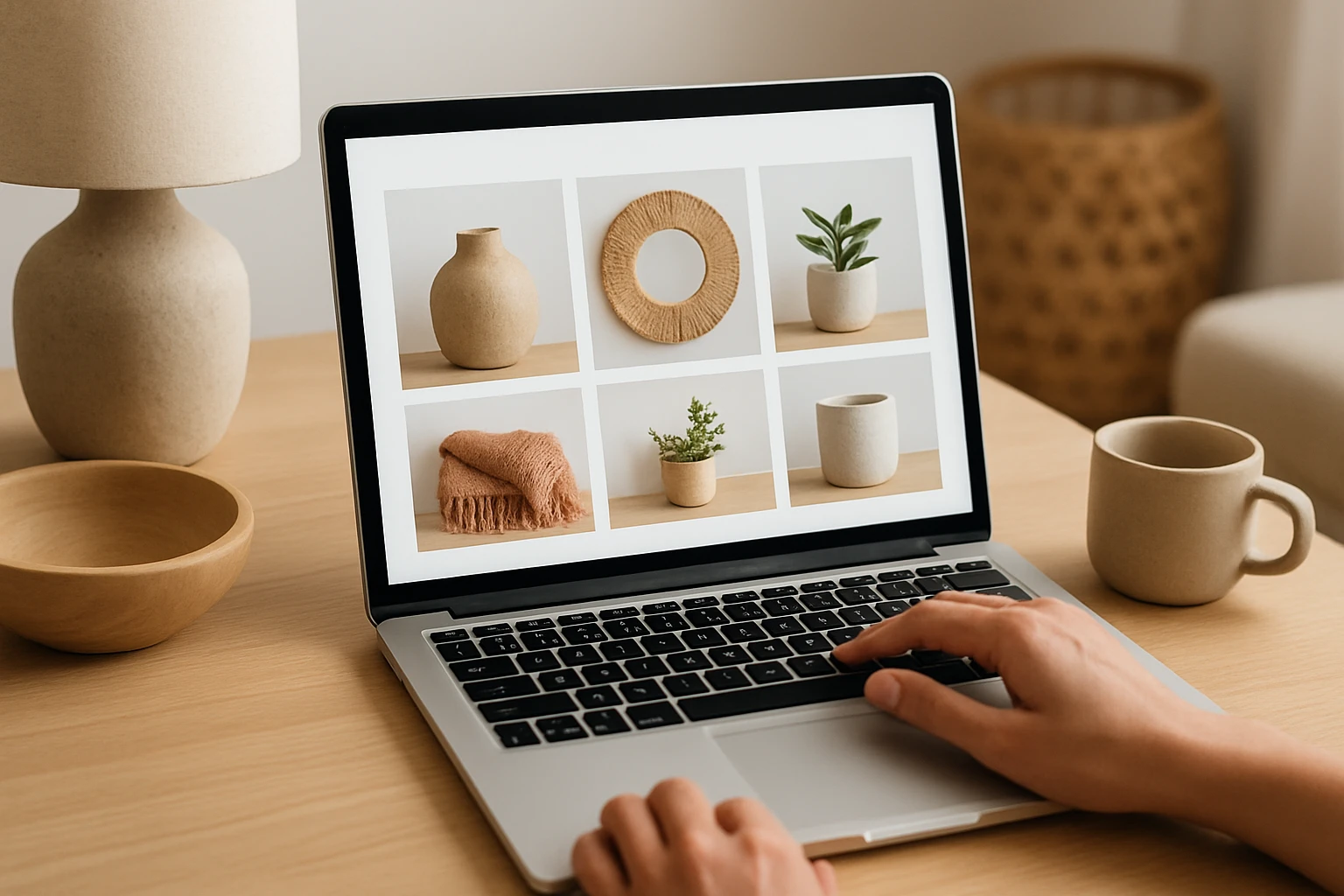
Sometimes the broad retailer solved 80 percent of the room, and that last 20 percent still feels flat. That is where small online décor shops come in. Emily Henderson’s piece says the quiet part out loud: these are shops to make your home unique, and the reference to “three new ones we love” suggests a steady refresh of fresh sources rather than a static catalog.
Why small shops outperform big chains on uniqueness
Small shops usually win on edit, not scale. They do not need to satisfy every shopper in every room category. That freedom lets them carry narrower, stronger product stories — the kind of ceramic vessel, textile, or framed piece that changes the tone of a room faster than five safe accessories ever could.
When a design editor highlights 13 small shops specifically for uniqueness, that is a useful signal for you as a buyer. The goal is not breadth. The goal is character. Those are different outcomes, and they reward different stores.
What kinds of products they tend to surface
This is where you tend to find the pieces with more point of view: patterned textiles, unusual ceramics, artist-made objects, prints with less algorithmic sameness, and limited-run décor that does not look like it was assembled by committee. If a broad retailer gives you the room, small shops give you the sentence that makes it memorable.
You also often see faster style turnover in these spaces. Henderson’s wording — “three new ones we love” — hints at a landscape that changes often. That is appealing if you are the kind of shopper who wants discovery, not just replenishment.
Best for people who want a home that does not look mass-produced
Best for: one or two personality pieces per room, thoughtful gifting, and shoppers who would rather own fewer things but make each one count a little more. This is the lane for the interesting object — not the bulk order.
There is a tradeoff. Smaller shops can mean less breadth, less predictable restocks, and shipping terms that deserve closer reading, especially if you are ordering across borders into the UK, Europe, or Australia. That does not make them less useful. It just means you should buy with your eyes open.
When everyone else has the same neutral lamp, small shops are where the interesting object usually lives.
How to choose the right option to shop online
Once you stop asking which store is “best” in the abstract, the decision gets much easier. The real question is narrower: what job does this purchase need to do tonight? A quick refresh, a room-scale reset, a giftable cart, or one piece with a pulse? Match the store to that job, and you cut out most of the waste.
Match the store to the shopping goal
Use the category signals first. The Home Goods general store spans far beyond one category, so it works well when you want variety and browse value. At Home clearly signals broader home updates and seasonal décor, so it makes more sense for a fuller project. Emily Henderson’s small-shop framing points you toward uniqueness over coverage.
HomeGoods sits in the broad middle — the familiar décor-heavy option for faster, less fussy shopping. That is why these stores should not compete head-to-head in your mind. They solve different versions of the same problem.
| If your goal is... | Start here | Add next | Why this mix works |
|---|---|---|---|
| Refresh a room quickly | HomeGoods | One small-shop accent | Speed first, personality second |
| Do a room-wide update | At Home | Independent art or textile later | Anchor pieces need scale and category depth |
| Build a giftable cart | Home Goods general store | Nothing else unless needed | Cross-category browsing is already built in |
| Make a space feel more original | Small online decor shops | Broad retailer for any missing basics | Character beats volume here |
Check shipping, returns, and duties before checkout
Style is only half the decision. Shipping cost, return friction, and duties can matter just as much — sometimes more. A shopper in Chicago and a shopper in Sydney are not having the same checkout experience, even if they love the same vase. The farther your order travels, the more you should read the fine print before you fall in love.
Look for three things: return windows, oversized-item rules, and whether taxes or duties are collected up front. Larger home goods and fragile décor are where the stakes rise. A decorative accent is easy to gamble on. A chair, mirror, or high-ticket ceramic piece is not. Quiet logistics questions often decide whether a “good find” is actually a good buy.
The smartest cart is usually a mix: one store for the practical pieces, another for the item that makes the room feel personal.
Use price bands to avoid overbuying
The visible Home Goods excerpt offers a useful reminder: a shopping cart can jump from low-cost accessories to high-ticket statement pieces very quickly. That is why I like simple price bands. Decide before you browse how much of your budget goes to low-risk accessories, how much goes to functional pieces, and whether there is room for one statement buy.
A real example helps. A candle, a fruit bowl, and a cutting board still feel controlled. Add a pillow and a vase, and your “small update” becomes a serious spend. That does not mean the expensive piece is wrong. It means you should know which item is supposed to carry the room before the cart makes the choice for you.
When you shop online with price bands in mind, you protect both your wallet and your eye. You also make it easier to split the mission: basics from the broad store, signature piece from the design-led one.
Now you can shop online with a clearer plan: broad when you need speed, larger-category when you need scale, small-shop when you want character.
Let store type drive the task, then let shipping, returns, and price bands keep the cart honest.
Which room are you trying to make easier, warmer, or more unmistakably yours next?
Additional Resources
Explore these authoritative resources to dive deeper into shop for home goods online.
Explore Style With US MART NEW YORK
Men’s, women’s, and kids’ fashion meets home, kitchen, and garden goods with free shipping, free returns, and app discounts for shoppers in the USA and beyond.
Explore Now- Editorial team


