What Makes Multi-Category Online Stores Worth It?

What Makes Multi-Category Online Stores Worth It?
At 9:47 p.m., a family is still at the kitchen table. One tab shows a pair of high heels. Another has a set of jewelry pieces. The third is open to a delivery calendar, where one item can arrive Friday and the rest next Wednesday. Someone pinches a product photo to zoom in on the fabric texture. Someone else asks whether the handbag can go back if the color reads too gray in daylight. Then comes the real question: click checkout, or keep looking?
That moment is exactly where multi-category online stores earn their keep. You are not just buying an object. You are trying to match a look, a budget, a timeline, and a mood — often all in one sitting. If the store makes that easier, it is worth your time. If it makes you hunt for basic facts, it is not.
The funny part is that the search results do not always answer this clearly. In the visible results tied to this topic, several excerpts are error pages or access blocks rather than useful explanations, and yet the shopping intent is obvious because phrases like “Looking to shop?” still appear in those broken snippets. So let’s answer the real question directly, without the fog.
What are multi-category online stores?
They are online shops that gather apparel, shoes, handbags, jewelry, beauty items, electronics, home and kitchen products, and related lifestyle items in one place, so you can solve a need without bouncing across five separate sites.
Watch This Helpful Video
To help you better understand home goods online stores, we've included this informative video from Gina's Shopping Life. It provides valuable insights and visual demonstrations that complement the written content.
What shoppers usually find there
You will usually find a mix rather than a single product line. Think dresses, blazers, wallets, necklaces, watches, pumps, clutches, hair extensions, home and kitchen appliances, office accessories, and giftable pieces that work for birthdays or housewarmings. Some stores skew toward fashion. Others lean into everyday essentials. The better ones make the range obvious right away.
That matters because most people do not shop for everyday items in neat silos. You rarely wake up needing only a dress. You also need shoes to go with it, maybe a handbag, perhaps a bracelet, and a beauty item before an event. Common retail practice reflects this: multi-category stores tend to group fashion, accessories, electronics, home items, and lifestyle products together because that is how real shopping trips happen.
How they differ from general retail sites
A general retail site can sell almost anything, from phone chargers to pantry staples. A focused multi-category store usually frames products around style, use cases, and seasonal needs. That makes a difference when you are trying to picture a jacket with a pair of heels or compare two handbags against the same outfit.
| Feature | Multi-category online store | General retail site | What it means for you |
|---|---|---|---|
| Category mix | Fashion, shoes, handbags, jewelry, beauty, home items | Broad, often unrelated categories | You can shop an outfit or need in fewer clicks |
| Browsing logic | Often organized by category, collection, or style | Often organized by department only | You get more context when comparing pieces |
| Product context | Product photos, styling suggestions, dimensions | Varies widely by seller or listing | You can judge fit and look more easily |
| Shopping goal | Build a coordinated purchase | Buy a single item quickly | You are less likely to miss matching pieces |
If a store only gives you vague category names, it is harder to trust than one that shows exactly what it sells.
Why the category is broad, not niche
“Multi-category” sounds narrower than it really is. In practice, it is a catchall for the products that shape how you dress, access, and equip your day. Not just a blazer. Also the pumps you wear with it, the wallet you carry, the necklace you add, and the beauty item you grab when you need a last-minute refresh.
The current search results actually highlight the confusion. Several visible excerpts are not substantive articles at all — they are “Something went wrong” or “Access Denied” pages, including pages served from an access-denied error host and another blocked page. Even so, the phrase “Looking to shop?” appears in the broken result snippets, which tells you the intent is plainly retail, not academic research. That gap leaves the main question unanswered unless you define the category yourself.
Why do multi-category online stores matter?

They matter because they save time, widen your options, and help you make purchase decisions without spending a Saturday driving from one store to the next.
Convenience for busy households
If you have ever tried to replace a handbag, buy a gift, and find a blazer in the same week, you already know the value. You can browse after dinner, compare finishes at 11 p.m., and place one order in slippers. No store-hopping. No guessing whether the right size or color is still available.
For families, that convenience compounds fast. One person cares about delivery timing. Another checks dimensions. Someone else notices whether the return policy is 14 days or 30. Shopping online lets everyone look at the same product page from the same sofa. That is far easier than splitting up in a big-box store under fluorescent lights.
Worth it usually means less running around and more confidence about what you are buying.
More variety than a single local aisle
A local store might give you six pairs of shoes and two of them are already dented. Online, you can compare high heels, pumps, clutches, crossbody handbags, necklaces, and watches in ten minutes. That breadth is one reason online shopping keeps pulling people in: you see more styles, more price points, and more combinations in one place.
This is especially useful for shoppers in the USA, UK, Europe, and Australia who browse globally before checking local shipping and pricing. You may discover the right item on Monday, then confirm whether it ships to Manchester, Melbourne, or Chicago before you pay. Cross-border browsing is normal now. The store just has to make the rules clear.
Better inspiration when you are styling
Style is visual. You do not just want a dress. You want to know whether that dress looks good with the right shoes, jewelry, and jacket. Good stores help by showing styled looks, alternate angles, close-ups of fabric, and related pieces that make sense together.
The search results themselves point in that direction. What you see is not just retail names but shopping-access and visual-browsing pages, including a top result titled “Virtual Store Tour.” That is a clue. People do not only want inventory. They want to see the store, the aesthetic, and the context before buying.
Convenience is nice. Visual confidence is what actually gets you to click “Place Order.”
How do multi-category online stores work?
Most of them follow the same basic flow: you browse categories, narrow with filters, study the product page, review shipping and return terms, then check out for delivery.
Browse categories and filters
You usually start with a category, a need, or a keyword. “Women’s dresses.” “Men’s blazers.” “Kids’ shoes.” Strong stores make that easy with clear top-level categories and filters for color, size, material, price, and availability.
That flow sounds ordinary because it is. It is also where a lot of weak stores fall apart. If the filters are sloppy, you get 180 results for “black bag” and half of them are the wrong style. If the categories are vague, you waste time opening product after product that does not fit your needs.
- Choose a category, collection, or search term.
- Filter by the constraints that actually matter — size, color, finish, material, price.
- Open a short list of products in separate tabs.
- Compare the details before emotion takes over.
Review photos, sizes, and materials
Once you land on a product page, the real evaluation begins. Look at every photo. Check whether there is a shot beside a person so you can judge scale. Read the dimensions twice. A handbag listed at a certain size looks very different from one that is smaller than you expected. Many expensive return mistakes start with one skipped measurement.
Materials matter too. Cotton, polyester, leather, metal, plated finish, tempered glass, ceramic — these are not small distinctions. They tell you how the item will wear, how heavy it may be, and whether it fits your day-to-day use. If you have a busy schedule, a delicate piece deserves a longer pause than it gets in a styled photo.
The presence of a “Virtual Store Tour” result in the search pages reinforces this point. Shoppers rely on visuals to evaluate stores, not just items. If the page makes the product feel real, you keep going. If it looks flat or incomplete, you hesitate.
Rule of thumb: do not buy until you can find the shipping cost, return window, and item details in under a minute.
Check shipping, delivery, and returns before paying
This step decides whether the purchase stays smart. Small items may ship cheaply and quickly. Larger or specialized items can trigger longer windows or extra handling. A $79 handbag can become a $129 decision once shipping is added. A set of electronics or appliances might need more careful delivery coordination. You want those answers before the cart feels emotionally “yours.”
Return information should be visible before checkout, especially for fashion and gift items. Can you return it by mail? Do you need the original packaging? Are some items final sale? Is there a restocking fee? Clear stores answer this without making you dig through five help pages.
If you are buying internationally, add four more checks: currency, taxes, duties, and delivery coverage. That is the difference between a smooth Sydney order and a frustrating surprise at the border.
What should you check before buying from one?
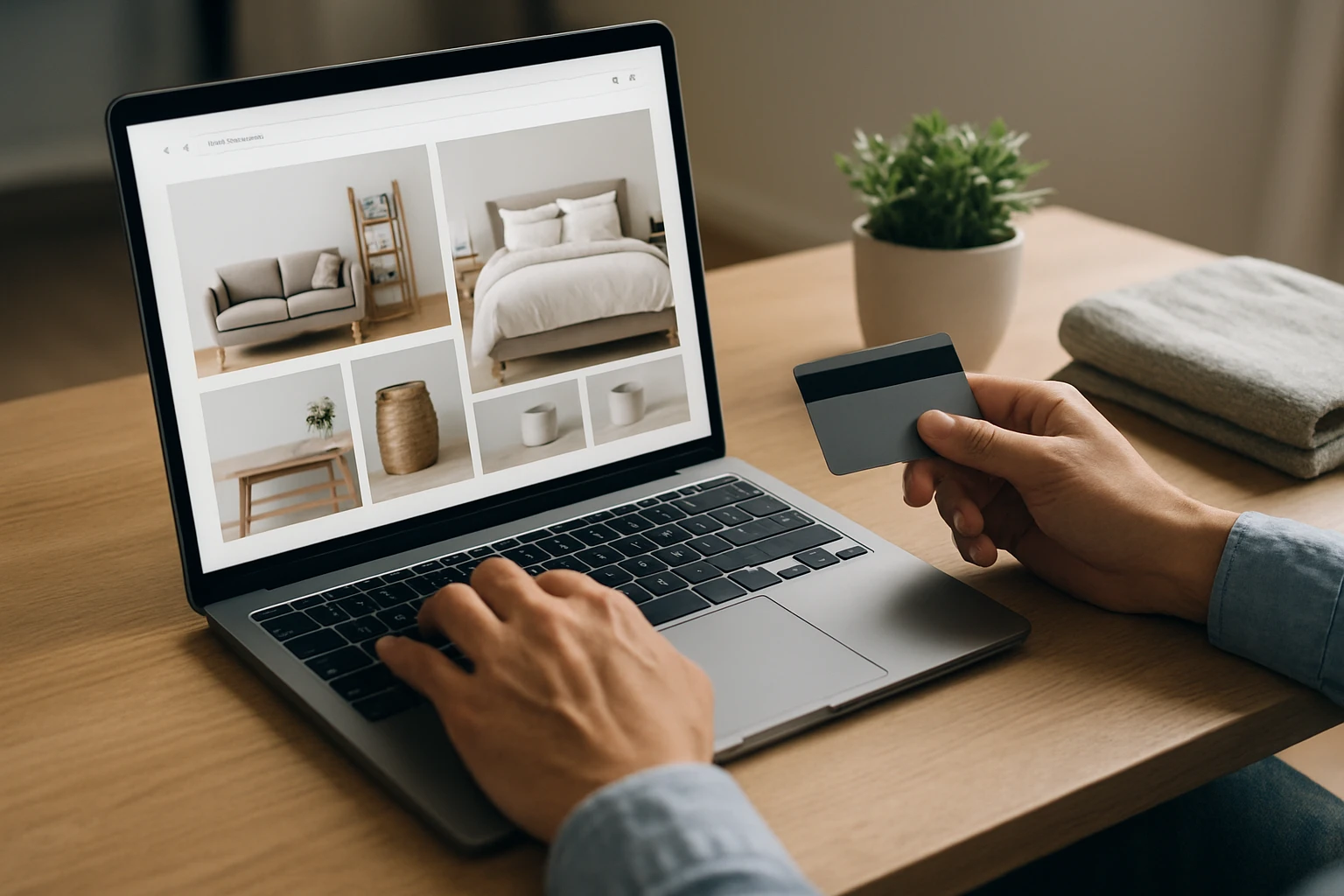
You should check whether the store gives you enough detail to make a low-risk decision. Good style is not enough. You also need usable facts, fair delivery terms, and support that feels reachable if something goes sideways.
Product detail quality
Start with the page itself. A trustworthy listing should tell you what the item is made from, how large it is, how to care for it, and what color to expect under normal light. Fashion and consumer items are tactile and visual. If you cannot judge texture, scale, and maintenance from the listing, you are buying half-blind.
At minimum, check photos, dimensions, materials, and care instructions. If a pajama set says “machine washable,” that is useful. If a jacket says “dry clean only,” that matters. If the only description is “beautiful modern piece,” move on. Adjectives do not help you decide whether a blazer fits right.
For cross-border orders, the real price is the item plus shipping, tax, and any return hassle.
Shipping cost and delivery zones
This is where a nice cart can turn sour. Always check the full landed cost, not just the sticker price. You want to know the shipping charge, delivery zones, estimated arrival window, and any exclusions for Alaska, Hawaii, rural postcodes, or international addresses.
International buyers should also confirm currency, duties or taxes, and whether returns must go back to the original country. A pair of shoes that seems reasonable in New York dollars may not feel so friendly once exchange rates and return postage enter the picture. Clarity beats a fake bargain every time.
| Check before paying | Why it matters | What good looks like | Red flag |
|---|---|---|---|
| Dimensions | Prevents fit mistakes | Exact size, fit notes, and weight | No measurements or only vague size labels |
| Materials | Signals durability and care needs | Specific fabric, leather, metal, or finish info | Only marketing words like “premium” or “luxury” |
| Shipping | Changes the real total | Cost and timing shown before checkout | Fees appear late or stay hidden |
| Return policy | Lowers risk if the item disappoints | Window, method, exclusions, and refund timing explained | Hard-to-find terms or confusing exceptions |
| Delivery coverage | Matters for cross-border buyers | Clear countries, regions, and any restrictions | No location guidance until checkout failure |
Returns, exchanges, and support
Returns are a trust signal. Not because you plan to send everything back, but because a store that explains returns clearly is usually thinking about the whole buying experience. You want an obvious window, simple steps, and a visible support path — email, form, chat, or phone.
The blocked and broken result pages in the current search results are a reminder of how fragile trust is online. If a page is inaccessible, vague, or broken, shoppers bail immediately. The same principle applies to returns and support. If you cannot find help fast, you assume the worst.
A practical test: pretend the item arrives damaged on a rainy Thursday. Can you tell, in under a minute, what you would do next? If yes, the store passes a basic reliability check. If not, keep your card in your wallet.
What common questions do shoppers ask?
Most shoppers ask the same three things: can I trust this store, when will my order show up, and does the assortment justify the price?
Is the store reliable?
Reliability starts with clarity. Look for complete product pages, visible policy links, realistic delivery language, and consistent site structure. A site that explains itself well tends to handle problems better than one that hides basics behind vague marketing copy.
You can also look at the broader context. When you search this space, recognizable retail names like major fashion and lifestyle stores appear quickly in the results. That tells you shoppers are benchmarking any new store against established online retailers. Fair or not, that is the standard. Your test should be similar: does this store answer questions as clearly as the big names do?
- Can you find contact information without digging?
- Do product pages show more than one photo and real dimensions?
- Are returns explained in plain language?
- Do category pages make sense the first time you click around?
The best store answers your next question before you have to search again.
How long will delivery take?
It depends on the item type, stock status, and destination. Small accessories often move faster than larger consumer goods. In-stock items usually beat special-order pieces. Domestic delivery to Boston is one thing; a cross-border shipment to Berlin or Perth is another.
What you want is not a magic promise. You want a believable one. “Ships in 2–3 business days” is helpful if the store also explains transit time. “Fast delivery” tells you almost nothing. If timing matters for a move, a party, or a holiday, read the shipping page before you get attached to the item.
Is the assortment worth the price?
Value is not just about being cheap. It is about fit. A store is worth the price if its selection matches the outfit, occasion, or gift you actually need. If you are updating your wardrobe, you may want stylish basics at moderate prices. If you are buying a present, packaging and presentation might matter more than shaving off $12.
Ask whether the assortment saves you decisions. Does the store offer enough range to compare finishes, sizes, and styles without overwhelming you? Can you shop across adjacent needs — apparel, shoes, handbags, jewelry, electronics, and home items — without starting over elsewhere? When the answer is yes, the store is doing real work for you.
A contrarian point here: more choice is not always better. If a store has 2,000 near-identical items and no useful filters, that is not variety. That is friction in prettier clothes.
Good assortment is not endless inventory. It is a selection that helps you decide faster and regret less.
Multi-category online stores are worth it when they replace guesswork with clarity.
If you get strong visuals, precise product details, straightforward delivery, and low-friction returns, you save time and buy with steadier nerves. If any of those pieces are missing, the convenience starts to evaporate.
So before your next order from multi-category online stores, what would make you feel fully confident enough to click checkout without a second tab open?
Additional Resources
Explore these authoritative resources to dive deeper into home goods online stores.
Explore Curated Style With US MART NEW YORK
Offers online men’s, women’s, and kids’ fashion with shoes, handbags, jewelry, free domestic and international shipping, and app discounts across the USA, UK, Europe, and Australia.
Shop Better- Editorial team


