Top 7 Home Décor Finds Online for 2026

Top 7 Home Décor Finds Online for 2026
A family stands in a half-finished dining room, tape measure stretched from ceiling to floor, comparing browser tabs with a bare junction box and a fan deck of Benjamin Moore paint swatches. The table is still wrapped in cardboard. Dinner is two weeks away. One wrong decision up there, and the whole room feels off.
If that scene feels familiar, this guide is for you. Shopping for home décor online gives you far more range than a local showroom ever could, but it also asks more of you. You have to read between the photos. You have to judge scale from a thumbnail. And if you live in the USA, UK, Europe, or Australia, you also have to think about fit, finish, and whether the seller actually understands what they’re offering.
I built this list for buyers who want beauty with receipts — visible craftsmanship, believable age, clear product details, and a size that fits the room you really have, not the fantasy room in the listing photo. Some of these styles belong over a 96-inch dining table. Some are better in a breakfast nook, stair landing, or front hall. All seven earn their spot because they solve a real decorating problem.
Selection Criteria for Buying Home Décor Online
Authenticity, age, and style
Watch This Helpful Video
To help you better understand antique chandeliers online, we've included this informative video from Maggie McGaugh. It provides valuable insights and visual demonstrations that complement the written content.
Pretty photos are cheap. Good home décor is not.
So we start with evidence of making, not mood. Attention to craftsmanship matters because quality pieces behave differently from mass-produced items. The finish is typically more nuanced, so a room feels more layered instead of reading as flat and repetitive. In older-style décor, materials and surface treatment often carry a level of detail that helps create the richer look people notice the moment they walk into the room.
That single point weeds out a lot of disappointing listings. If the seller cannot show close-ups of edges, joins, textures, hardware, or construction, you are shopping decoration, not a meaningful home accent. The same rule applies across styles: Art Deco should show disciplined geometry; glass accents should show the confidence of hand-finished work; wrought iron should reveal honest forging rather than factory sameness.
Don’t buy purely on photos; for home décor, the missing spec is the real risk.
| Criterion | Why It Matters | What You Should Ask |
|---|---|---|
| Authenticity | Real age and workmanship affect value, appearance, and longevity. | What style is it? Are there close-up photos of materials, finishes, and construction? |
| Style fit | A good décor piece should suit the room’s architecture, not fight it. | Does it read Art Deco, Venetian, Victorian, Midcentury, or mixed? |
| Condition | Minor wear adds character; structural issues add cost. | Are any parts, finishes, or decorative elements replaced or repaired? |
Product details and conversion
This is the part buyers skip — then regret.
Many decorative pieces began life in one market and are sold into another. That is not a problem if the listing explains what has been updated. Read those details carefully. They should tell you what has been done and what standard the piece now meets. That level of clarity is what you want from any seller, whether you’re shopping in New York, London, Paris, or Melbourne.
Ask direct questions. Has the item been refreshed recently? What materials does it use? Is it ready for your space? How much does it weigh? Does it hang from a chain, rod, or fixed stem? Does the mounting system cover a modern ceiling box? Decorative items often need a little planning anyway, but you should know before checkout whether you are buying a simple install or a small project.
I also look for honesty around conversion. Some sellers clearly state what has been updated. Others say “in working order,” which is much less useful. A piece that looked perfect in one setting is not automatically ready for another today.
Size, ceiling height, and room scale
Scale beats style every time. A magnificent oversized piece in a low room feels oppressive. A tiny accent in a two-story foyer looks accidental.
Start with the room you have. Measure ceiling height, table size, and the width of the zone the piece needs to command. In a dining room, you want presence over the table, not just visual interest. In a foyer, the piece has to hold the vertical space when you see it from 20 feet away. In a smaller room, you want cleaner silhouette and tighter spread.
That is why this list rewards proportion alongside beauty. A hand-finished glass accent may be the strongest choice in a formal room with plaster detail and ceiling height to spare. In a breakfast nook with an 8-foot ceiling, a compact metal piece or pendant-style form is usually smarter.
| Room Situation | Usually Works Best | Main Risk |
|---|---|---|
| Formal dining room with high ceiling | Hand-finished glass or Murano-inspired décor | Choosing a piece with too little visual weight |
| Period house with layered finishes | Art Deco, wrought iron, Victorian, Art Nouveau | Buying a style that clashes with trim and hardware |
| Apartment, breakfast nook, bedroom | Brass, bronze, silver, Midcentury, pendant forms | Too much drop length or ornament for the ceiling height |
#1-#2: Statement Pieces for Formal Dining Rooms and Foyers
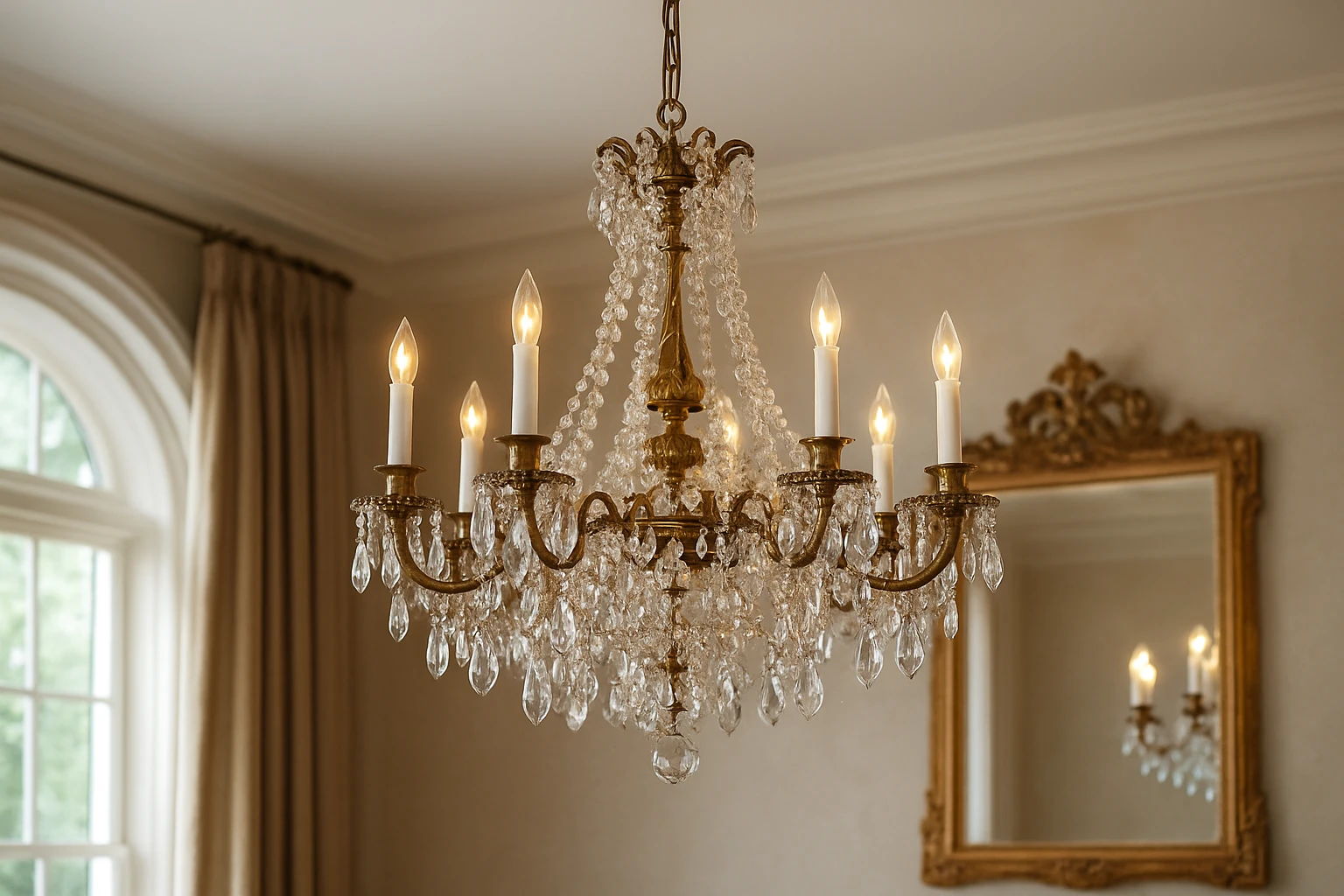
If you want one fixture to anchor the entire room, start here. These are the styles that carry a space from “freshly painted” to “finished.” They also happen to be the easiest to get wrong if you ignore scale and condition.
#1 Hand-cut crystal-style chandelier
A real hand-cut crystal-style chandelier still sets the standard for ceremonial rooms. It throws light in layers, not just rays, and the best examples feel bright without turning harsh. That quality is rooted in craft. Traditional production took real labor, and hand-cut crystal has more intricate faceting than modern machine-cut pieces. Older crystal often used higher lead content too, which helps explain the softer but more sparkling light people notice the moment they walk into the room.
- Summary: The most classical, light-rich option on this list — ideal when you want a room to feel established, not merely decorated.
- Best for: Formal dining rooms, entry halls, stair landings, and rooms with plaster medallions, fireplaces, or long sightlines.
- Check before you buy: Drop length, overall width, missing prisms, replacement parts, total weight, and whether the piece is already updated.
In practice, crystal works best when the rest of the room is willing to support it. Think dark wood, polished stone, brass hardware, or even a quiet matte wall that lets the piece carry the sparkle alone. I would choose crystal first for a 10-seat dining room before I would choose it for an open-plan family kitchen.
#2 Murano glass chandelier
Murano glass gives you drama of a different kind. Less jewel-box, more sculpture. The online market includes Murano glass and Venetian glass among brass, bronze, silver, and mirrored options, and strong versions of this category remain highly visible online. The chandeliers-and-pendants section in the excerpt shows a broad range of items for sale, including Venetian-linked forms such as a Rezzonico-style piece with clear Murano glass and multicolor detail from Venezia, Veneto.
- Summary: A hand-blown glass centerpiece with movement, color, and shape — especially strong when you want the piece to read as art in daylight.
- Best for: Foyers, formal dining rooms, gallery-like interiors, and homes where the walls stay simple.
- Check before you buy: Chips, flea bites, cracks near joints, symmetry, professional packing, and whether any elements are later replacements.
Murano is also forgiving in rooms that mix old and new. A Venetian-inspired piece can sit surprisingly well over a modern travertine table or beneath spare crown molding because the glass itself carries the ornament.
When each one wins
For grand rooms, the safest bet is a piece with visible craftsmanship — cut crystal or hand-blown glass reads as intentional even in a large space.
| Choose This | If You Want | Works Especially Well With | Watch Out For |
|---|---|---|---|
| Hand-cut crystal | Maximum sparkle and classic formality | Traditional dining rooms, paneled entries, polished wood | Too-small scale, incomplete crystal sets, heavy glare in low rooms |
| Murano glass | Sculptural presence and color-rich character | Foyers, refined eclectic interiors, pared-back walls | Fragility in shipping, difficult replacements, over-busy surroundings |
One more trust signal matters here. Some sellers travel regularly to source pieces and personally select each item they offer. You do not need every seller to cross an ocean for inventory, but you do want some sign of curation. Statement pieces should come with a point of view, not just a shopping cart.
#3-#5: Character-Rich Styles for Period and Eclectic Homes
This middle tier is where most buyers find their real match. Not every room wants palace sparkle. Sometimes you want geometry, patina, or a little grit. The online market proves it. Even though Venetian glass stays highly visible, strong period rooms often look better with metalwork, softer painted finishes, or historically specific lines.
#3 Art Deco chandelier
Art Deco gives you order. Stepped shapes, prismatic glass, streamlined metal, and clean rhythm. When a room has black trim, walnut veneers, checkerboard flooring, or 1920s and 1930s bones, Deco usually looks right faster than anything else. The online listings even include Art Deco-inspired pendant forms, which tells you something useful: Deco lighting spans both chandelier and pendant territory with ease.
- Summary: Crisp geometry and strong silhouette for buyers who want period character without floral ornament.
- Best for: Prewar apartments, dining rooms with symmetrical layouts, foyers with stone or tile floors, and tailored eclectic homes.
- Check before you buy: Cracks in prismatic glass, replated metal, non-matching shades, and whether the fixture is truly period or a later revival.
Deco also solves a common decorating problem: how to add age without adding fuss. If your room already has bold rug pattern or graphic art, a good Deco piece supports the architecture without competing with everything below it.
#4 Italian tole or wrought iron chandelier
This is the style I reach for when a room needs backbone. Mixed-material decorative pieces are a perfect example of how antique-inspired items appear online. Tole softens the piece with painted leaf or floral detail. Wrought iron gives it structure. Together, they bridge rustic, Mediterranean, French country, and quietly formal interiors better than many buyers expect.
- Summary: A grounded, textural choice that brings age and character without relying on sparkle.
- Best for: Breakfast rooms, studies, old kitchens, farmhouses, villas, and homes with beams, plaster, or earthy stone.
- Check before you buy: Rust, bent arms, paint loss, later touch-ups, wobble at the central stem, and whether candle sleeves look appropriate to the period.
Wrought iron matters because it reads honest from a distance. Even across a screen, you can usually tell whether the lines feel forged or stamped. That tactile quality becomes even more valuable once the piece is installed over a dining table or in a moody study.
#5 Fer Forge, Victorian, or Art Nouveau chandelier
These three styles sit together because they serve the same buyer: someone furnishing a room with personality already built in. The selection spans Art Nouveau, Fer Forge, Victorian, French, and Italian giltwood, which tells you how broad this lane can be. Fer Forge brings French wrought-iron strength. Victorian pieces carry more ornament, often with richer metalwork or shade arrangements. Art Nouveau leans organic — stems, flowers, curling lines, asymmetry that still feels elegant.
- Summary: The most atmospheric category here, ideal when you want the light to feel like part of the room’s story.
- Best for: Libraries, bedrooms, front parlors, layered eclectic homes, and period properties that can absorb decorative line.
- Check before you buy: Missing shades, replaced decorative elements, fragile floral details, hanging hardware, and total visual busyness once the room is furnished.
Period-true doesn’t have to feel delicate; wrought iron and tole can look antique without overwhelming the room.
If your house dates from the late 19th or early 20th century, these styles often feel more convincing than a generic crystal piece ever will. And if your home is newer, they can still work beautifully — just give them space. A 1910-style Art Nouveau piece wants simpler curtains, quieter wall color, and fewer competing curves nearby.
#6-#7: Compact and Versatile Options for Smaller Rooms
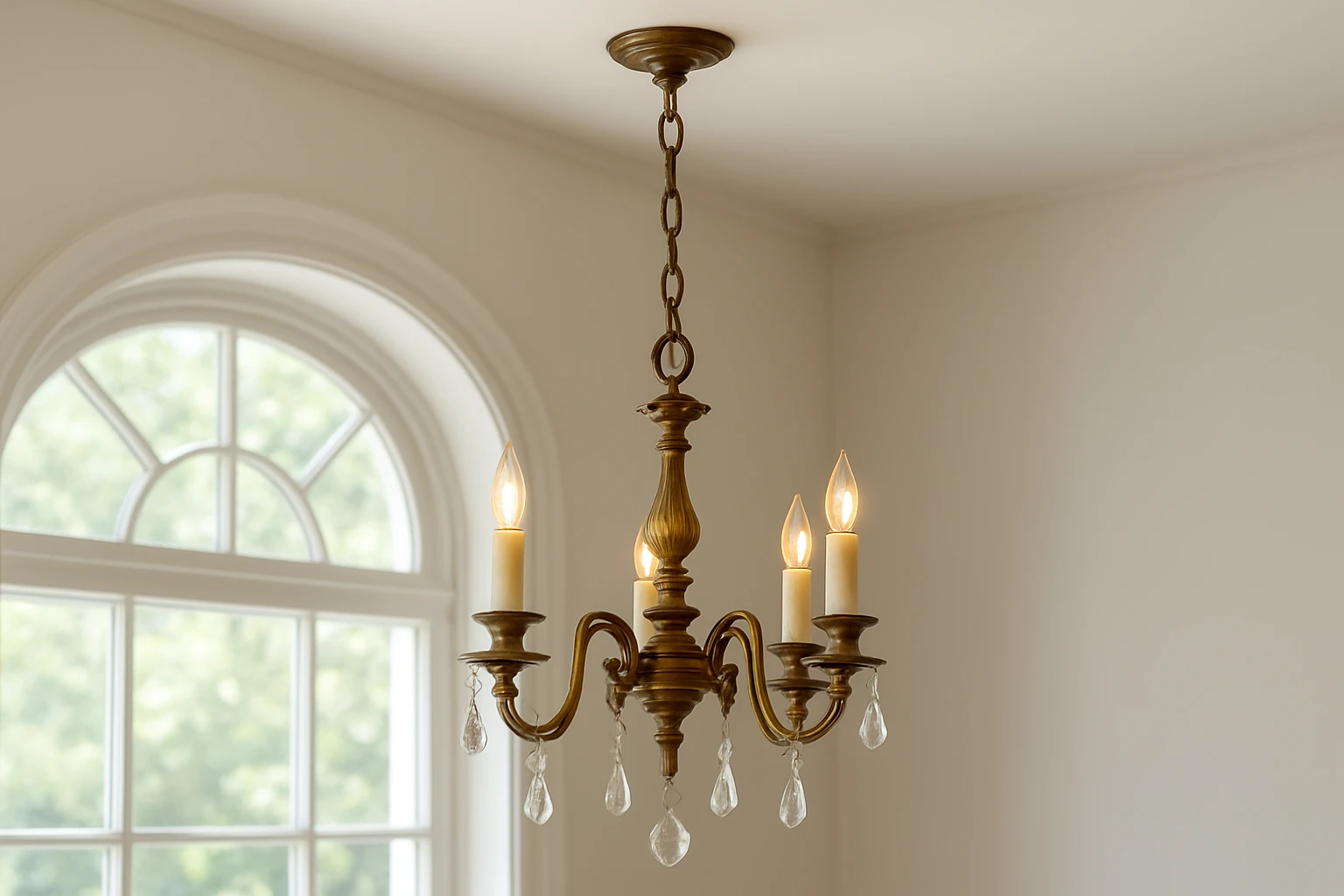
Not every ceiling deserves a cascade of sparkle. Some rooms need an antique mood with less drop, less weight, and less ceremony. This is where online shopping gets especially useful, because the same sellers who list grand foyer pieces often carry smaller brass, bronze, Midcentury, or folk-art fixtures in the same catalog.
#6 Brass, bronze, or silver chandelier
Metal chandeliers are the quiet professionals of home décor. A brass or bronze fixture can still feel old and significant, but it usually asks less of the room than crystal or blown glass.
- Summary: The easiest antique style to place across bedrooms, breakfast areas, guest rooms, and modest dining spaces.
- Best for: Lower ceilings, apartments, secondary rooms, and anyone who wants patina without visual clutter.
- Check before you buy: Real patina versus artificial aging, plating wear, bent arms, matching candle sleeves, and whether the chain length suits your ceiling.
Silver-toned examples can sharpen a cooler palette. Bronze deepens a warm one. Brass does almost everything if the finish is believable.
#7 Midcentury or folk-art chandelier
Midcentury and folk-art fixtures give you flexibility that more formal pieces often do not. Midcentury designs often have cleaner arms, leaner profiles, and glass elements that feel airy. Folk-art fixtures can be handmade, playful, and slightly irregular — the kind of light that makes a room feel personal instead of showroom-correct.
- Summary: A strong choice when you want age, charm, and a looser attitude toward style mixing.
- Best for: Kitchens, breakfast nooks, kids’ spaces, home offices, casual dining rooms, and collected interiors.
- Check before you buy: Socket spacing, arm balance, replacement shades, hanging height, and whether the scale stays modest enough for daily-use rooms.
I like Midcentury most when the room already has clean furniture lines. I like folk art when the room needs warmth and one slightly unexpected gesture — something that feels found rather than ordered.
Pendant-style antique looks for lower ceilings
This is the practical bridge many buyers miss. Online listings often mix chandelier and pendant forms in one category, which makes sense. Once your ceiling drops low enough, the distinction matters less than the silhouette. Art Deco-inspired pendant forms are a useful reminder that pendant shapes can still deliver antique character.
If your ceiling is low, think in outlines first. How broad is the piece when you walk under it? How low does it sit? How dense is the ornament? A compact globe, restrained metal frame, or shallow basket shape will usually serve you better than a layered multi-tier design.
If the ceiling is low, think in terms of silhouette first and ornament second.
| Ceiling Situation | Safer Choice | More Risky Choice |
|---|---|---|
| 8-foot room | Compact brass, bronze, globe pendant, simple Midcentury | Deep crystal drops or wide multi-tier forms |
| 9-foot room over table | Small chandelier with controlled drop | Oversized foyer-style piece |
| Tall foyer or stair hall | Crystal, Murano, or large period statement piece | Small fixture that disappears visually |
How to Choose the Right Option
Match the piece to the room and ceiling height
The best home décor is not the prettiest listing. It is the one that makes the room feel proportioned the minute it goes up.
Over a dining table, center the piece on the table, not the room, and keep enough clearance so sightlines still work during dinner. In open circulation areas, protect headroom. In foyers, step back and consider how the piece looks from the front door and from the landing above. A dining room statement can flatter you from four feet away. A foyer piece has to perform from 20.
If you feel torn between two sizes, look harder at the listing’s full dimensions and chain length. Online marketplaces are full of flattering camera angles. A 22-inch-wide piece photographed in a tight crop can look grand. A 36-inch decorative piece photographed in a cavernous gallery can look modest. Trust the tape measure in your hand more than the mood in the photo.
Confirm details, dimensions, and mounting information
This is where online buyers save themselves money.
Ask for the details in plain English: Has it been updated? What materials and finish does it use? Is the mounting hardware included? What is the piece’s total drop from ceiling to bottom? Use that as a benchmark for clarity, not as an assumption you make across the whole market.
If you’re shopping across borders, be even stricter. A seller in Italy or France may describe a piece beautifully and still leave out the one detail your installer needs. For buyers in the USA, UK, Europe, and Australia, compatibility is not a small footnote. It is part of the purchase.
Use seller provenance as a trust signal
Provenance online rarely arrives as a perfect chain of ownership. More often, it shows up as seller behavior.
Does the seller describe the piece confidently? Do they name style, material, period, and what has been restored? Do they offer extra photos without drama? A note about personally selecting pieces tells you something about curation. So does a marketplace showing immense breadth — thousands of options in one category — which tells you that filtering by size and style is not optional. It’s survival.
The best online décor buy is the one the seller can explain in two sentences: what it is, what has been done to it, and what room it suits.
| If Your Priority Is... | Start With | Verify First |
|---|---|---|
| Grand formal impact | Hand-cut crystal or Murano glass | Scale, updates, missing elements, shipping method |
| Architecture and mood | Art Deco, wrought iron, Fer Forge, Victorian, Art Nouveau | Period accuracy, finish condition, ornament density |
| Compact flexibility | Brass, bronze, silver, Midcentury, folk art, pendant forms | Drop length, headroom, material details, mounting information |
If you want one final filter, use this: craftsmanship, compatibility, scale, credibility. That sequence will save you from most bad buys in home décor online searches, no matter how seductive the first photo looks.
Beautiful home décor earns its place when four things line up: craftsmanship, a secure fit, correct scale, and a seller who can tell you exactly what you’re buying.
That filter cuts through the noise when you shop home décor online, whether you want a statement piece over a dining table or a modest accent in a breakfast nook.
When you look at your own ceiling tonight, which matters more for your space — sparkle, silhouette, or the story behind the piece?
Additional Resources
Explore these authoritative resources to dive deeper into antique chandeliers online.
Explore Fashion and Décor With US MART NEW YORK
US MART NEW YORK brings online shopping for men’s, women’s, and kids’ fashion together with décor, gifts, complimentary delivery, easy returns, and app savings across USA, UK, Europe, and Australia.
Browse Now- Editorial team


