
7 Best Home Goods Online Shopping Tips
A family sits at the kitchen table with three tabs open, a tape measure stretched across a notepad, and a shortlist covered in blue ink. Before anyone clicks buy, they are comparing dimensions, finishes, and delivery windows — which is exactly how smart home goods online shopping usually starts.
A beautiful photo can hide a 72-inch width, a hard-to-clean fabric, or a return process that turns a $39 mistake into a nuisance. When you shop from a screen, you lose the quick reality check you get in a store. That means your process has to do more work.
If you want fewer regrets and better value, keep your checks simple: know the room, measure the space, read the materials, study the review patterns, and confirm shipping before you pay.
#1 Build a room-by-room shopping list before you browse
What it is
Watch This Helpful Video
To help you better understand home goods online, we've included this informative video from Kristen McGowan. It provides valuable insights and visual demonstrations that complement the written content.
Start with the space, not the website. Write down the room, the problem you are trying to solve, and the style you want before you open a marketplace or retailer page. Common sense tells us shopping gets easier when you define the room, the function, and the look before you compare products.
Why it matters
Without that short list, you drift. You go looking for storage and end up staring at candles, framed prints, and accent pillows you never planned to buy. A room-by-room list keeps your attention on need first, style second.
Rule of thumb: if you cannot name the room and the use case in one sentence, keep browsing.
Quick example
Instead of searching “nice decor,” write a line like this: “Entryway — narrow bench, easy to wipe clean, dark finish.” That sentence gives you a filter. It also helps you ignore everything that looks good but solves nothing.
#2 Measure first, then compare sizes and fit
What it is
Measure the exact area where the item will live, then measure the path it has to travel. For furniture, that means the room, doorway, hallway, and stair turn. For bedding, it means mattress size, depth, and topper height. For kitchen tools or storage, it means shelf width, cabinet depth, and handle clearance.
Why it matters
The best-looking item is useless if it does not fit the bed, shelf, hallway, or luggage space you bought it for. Checking dimensions, weight, and capacity before checkout is one of the easiest ways to avoid returns and awkward delivery surprises.
If the listing hides measurements, treat that as a warning sign and keep shopping.
| Category | What To Measure | Common Miss |
|---|---|---|
| Bedding | Mattress size, depth, topper height | Fitted sheet looks right but will not stretch over the corners |
| Storage | Shelf width, opening height, bin depth | Container fits the shelf but not the access space |
| Furniture | Item footprint, doorway width, stair clearance | Piece fits the room but cannot get through the front door |
Quick example
A Queen sheet set with 14-inch deep pockets can be a great buy. That number matters. If your mattress and topper together measure 15 inches, a bargain set can become a nightly irritation.
#3 Check materials, finish, and care labels before you commit
What it is
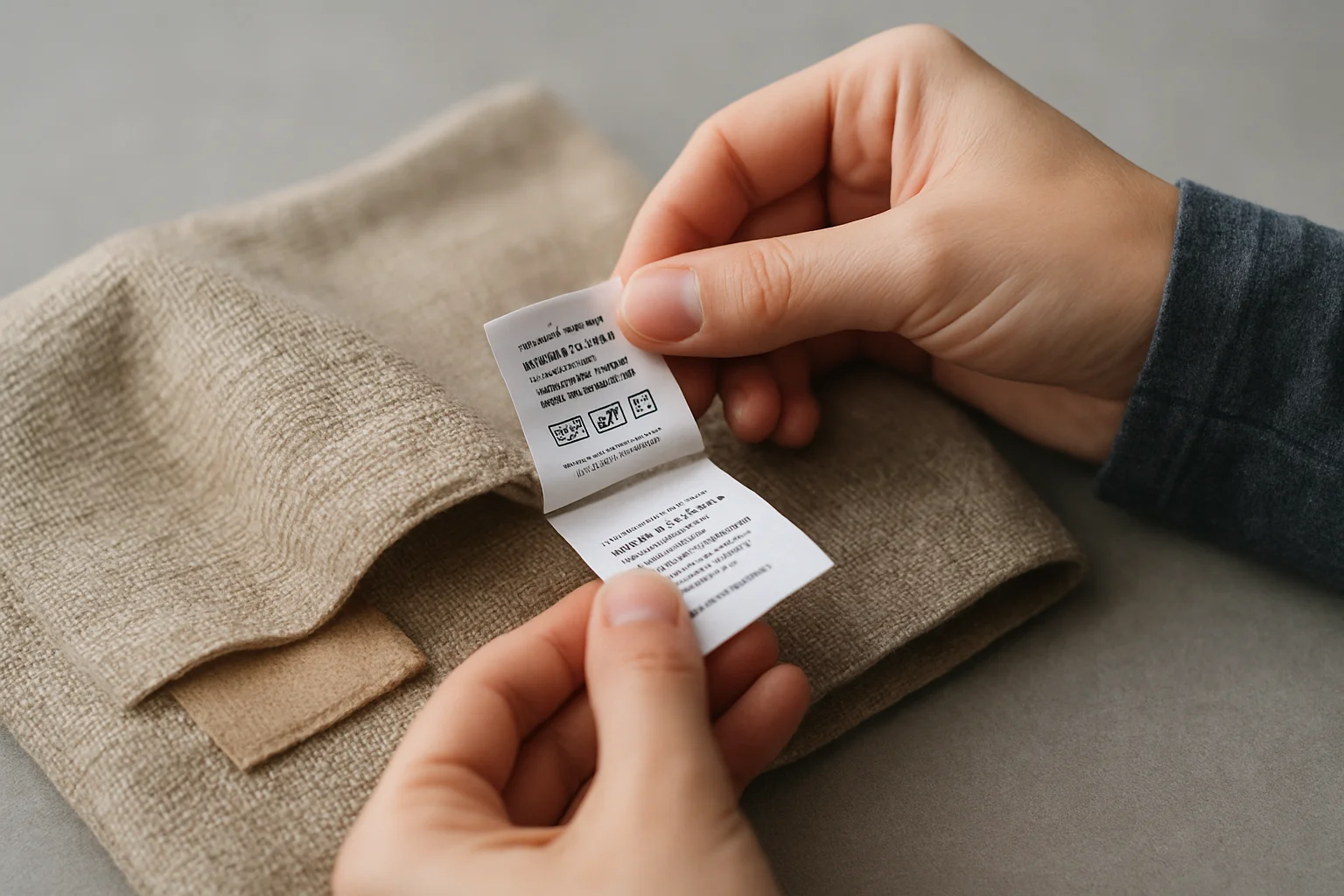
Read the material description, finish notes, and care instructions as carefully as you read the price. Cotton, microfiber, stainless steel, engineered wood, velvet, matte paint, and glass all behave differently once they are in your home.
Why it matters
Material quality and cleaning rules often matter more than the first photo or the lowest price. A fabric that needs delicate care may look elegant online, but it can be a poor fit for a home with kids, pets, spills, or heavy daily use.
Product listings with clear material details and recognized textile or safety information can be especially helpful. You do not need every item to carry a certification, but you should notice when a seller gives clear material information instead of vague marketing language.
Practical rule: buy for the care routine you actually have, not the one you wish you had.
Quick example
If you need a rug for a narrow kitchen walkway, a washable low-pile option may beat a thicker, softer style that traps crumbs and takes longer to clean. The less glamorous choice often wins after month three.
#4 Read ratings and reviews for patterns, not just stars
What it is
Look past the overall star score and read for repeated themes. Reviews tell you whether buyers keep praising the same strengths — or repeating the same complaint about fit, quality, color accuracy, or durability.
Why it matters
A single score compresses too much information. On many retail listings, an onion holder might appear at a modest price with a strong star rating from dozens of reviews. That sounds solid, but the useful question is not “Is the rating good?” It is “What do buyers keep saying?”
Look for review themes that repeat three or more times; one-off complaints matter less than patterns.
Quick example
If three reviewers say a storage basket feels smaller than expected, and four others say the handles loosened quickly, treat that as a signal. If one person complains about color and nobody else mentions it, that matters less. You are not reading reviews to find perfection. You are reading them to spot risk.
#5 Compare selection across retailers before you buy home goods online
What it is
Check more than one store or marketplace before you decide. Different retailers carry different sizes, finishes, price bands, delivery options, and return terms. Comparing selection gives you context, and context keeps you from settling too early.
Why it matters
The first page of results can make a category feel smaller than it really is. You do not have to browse every result, but that number is a useful reminder: your first 12 thumbnails are rarely the whole market.
Do not judge an entire category from the first page of results; compare at least two retailers or marketplaces.
Quick example
Say you need a table lamp. Retailer A has the right shape but slow delivery. Retailer B has better filters and a lower price. Retailer C offers a similar finish with easier returns. Ten extra minutes of comparison can save you both money and hassle.
#6 Use apps, saved lists, and alerts to track better buys
What it is
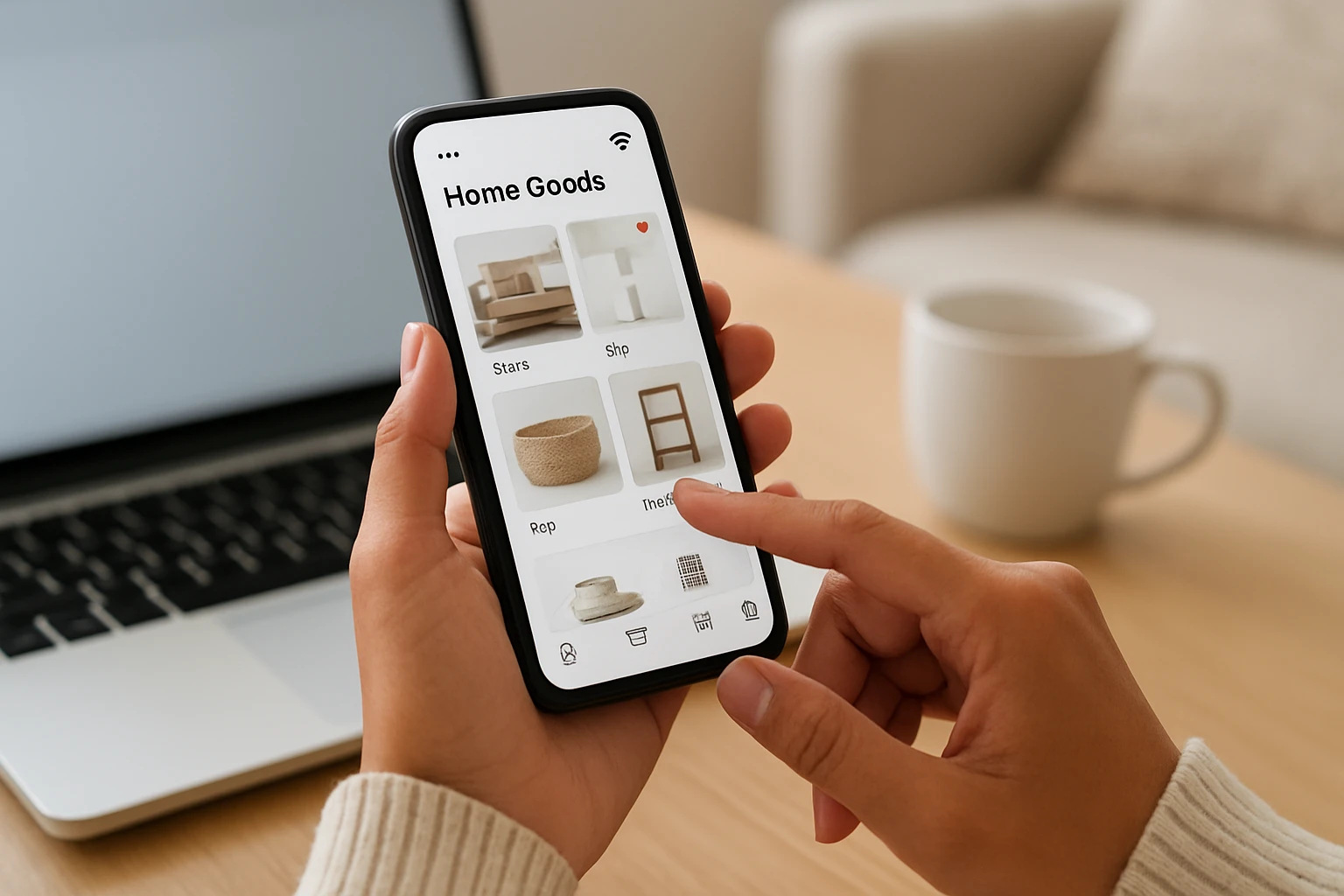
Use a retailer app, a saved wishlist, or a simple notes app to track sizes, finishes, prices, and alternatives. This works especially well when you are furnishing one room over several weeks instead of buying everything in a single night.
Why it matters
Saved searches reduce memory mistakes. They also help you notice when a product reappears, changes price, or goes out of stock. Even a basic app page can tell you what kind of support and upkeep a retailer provides.
Retailer app listings often include sections for data safety, ratings and reviews, what’s new, app support, similar apps, and family sharing. Those headings may sound routine, but they reveal whether the app is current, whether help exists, and whether the experience has been thought through for real shoppers.
If you buy often, a saved list beats memory; it keeps you from repurchasing the wrong size or style.
Quick example
Create a list called “Guest Room — July” and save two sheet sets, one lamp, and one storage basket with their dimensions beside each item. When you are on a train platform or in a store aisle, your notes will beat a camera roll full of random screenshots.
#7 Treat gift cards and low-risk items as smart first purchases
What it is
If you are trying a retailer for the first time — or shopping for someone else — start with a low-stakes purchase. That could be a gift card, a small decor piece, or a low-cost household accessory.
Why it matters
This approach lets you test the experience before committing to a large order. You learn about shipping speed, packaging quality, checkout flow, and customer support without taking a big financial swing.
Gift cards can be part of the home-shopping journey too. They are useful when you know someone’s style is specific, or when you want to let a newly moved family choose the final details themselves.
Best first buy: a gift card, small decor item, or low-cost accessory that tests service without a big commitment.
Quick example
If you are unsure about a retailer, order a simple tray, drawer organizer, or candle holder first. If the item arrives on time, matches the listing, and the return path looks fair, you have learned something valuable before ordering the larger piece.
How to choose the right option
Step 1: Set your budget and delivery deadline
Start with two numbers: how much you want to spend, and when you need the item. That sounds obvious, but it changes your shortlist fast. A sofa table needed by Friday is a different purchase from one you can wait three weeks for. Common sense applies here: the safest purchase is the one that fits your budget, your timeline, and your comfort with the seller’s policies.
Step 2: Rank must-haves against nice-to-haves
Write down your non-negotiables first. Size, washable material, color family, power source, or storage capacity might be true must-haves. A trendy shape or a special finish may be a bonus, not a requirement. When you separate the two, impulse loses some of its power.
Step 3: Check return policy and regional shipping
If you shop across regions — say from New York to London, Berlin, or Melbourne — check shipping coverage, delivery estimates, and return rules before you pay. A low headline price can stop looking attractive once long delivery windows or awkward returns enter the picture.
Choose the item that solves the problem cleanly, not the one with the prettiest photo.
| Decision Check | Good Sign | Red Flag |
|---|---|---|
| Fit | Clear dimensions match your notes | Measurements are missing or vague |
| Function | Meets daily-use needs without extra compromises | Looks nice but misses the real use case |
| Price | Total cost feels reasonable for the material and category | Cheap item becomes expensive after shipping or replacement risk |
| Shipping | Timeline fits your deadline | Delivery window is unclear or unrealistic |
| Returns | Policy is visible and manageable | Return terms are hard to find or restrictive |
When two options look close, use that table as your tie-breaker. If one item wins on fit, function, and returns, it is usually the stronger buy even if another version photographs better on your screen.
Good home goods online shopping is less about luck and more about a repeatable checklist.
When you define the room, verify size, inspect materials, read review patterns, and confirm shipping before you pay, you cut mistakes and buy with more confidence.
Which step will you add to your next home goods online purchase before that final click?
Explore Fresh Finds With US MART NEW YORK
Enjoy online shopping for men’s, women’s, and kids’ fashion plus accessories, home and living items, complimentary delivery, easy returns, and app-based shopping across the USA, UK, Europe, and Australia.
Shop Smarter


