Top 7 Online Stores for 2026

Top 7 Online Stores for 2026
A family in Melbourne compares delivery totals on one laptop while a couple in London keeps a second tab open, hoping the pieces they like will actually arrive on time. The photos look polished. The checkout math looks less charming.
If you're trying to shop online from the USA, UK, Europe, or Australia, this guide is built for you. Men, women, and families buying fashion, shoes, bags, jewelry, watches, beauty items, electronics, home essentials, gifts, or accessories all run into the same problem: a pretty product page can hide ugly delivery math, vague return rules, or a shipping promise that falls apart at the last screen.
I’ve made enough late-night carts to know that the store usually decides the experience before the product does. Some sites are superb for fast comparison. Some are only worth it if you reorder the same essentials every month. And some famous names still feel oddly fragile online — which shows up fast when a search result gives you an error instead of a product page.
Selection criteria
What counts as a strong online store
Watch This Helpful Video
To help you better understand shop home goods store online, we've included this informative video from Katie Vining | Shop With Me. It provides valuable insights and visual demonstrations that complement the written content.
A strong online retailer does three things well. First, it makes the catalog legible: size, material, care, color, stock status, and delivery timing. Second, it gives you a browsing flow that matches the purchase. A broad marketplace helps when you want to compare 10 items in 15 minutes. A membership-based essentials brand works when you already know you need the same basics again. A design-led store earns its place when you want a look, not endless tabs.
That distinction matters. A useful buyer’s guide should separate broad marketplaces, membership-based essentials brands, and design-led stores because they solve different shopping problems. Amazon and Wayfair are not trying to do the same job as Public Goods or Zara Home, and you save time when you judge them on the job they are actually built to do.
How we weigh price, shipping, and returns
Price is only the opening bid. For cross-border shopping, you need the landed cost — item price, shipping, and the return reality if the item disappoints. A $39 item can become a bad deal quickly if the delivery fee doubles the total or the return window is buried three clicks deep.
We prioritize stores that show shipping and return windows before checkout. That is basic buyer respect. I’ve seen shoppers in New York shrug off a slow return on a small purchase, then regret the same casual click on a larger item.
| Factor | What good looks like | Why it matters |
|---|---|---|
| Shipping visibility | Costs and delivery dates shown early | You can compare the real total before you pay |
| Taxes and fees | Estimated before the last screen | Cross-border orders stop being guesswork |
| Returns | Clear window and practical method | Fragile and higher-value items carry more risk |
| Store type | Marketplace, essentials brand, or curated shop | You start in the right aisle instead of the wrong site |
If a store hides the final cost until checkout, it is not a great option for cross-border shoppers.
Why international availability matters
For shoppers in the USA, UK, Europe, and Australia, country-specific shipping access belongs at the top of the checklist. A store can be excellent in Chicago and awkward in Copenhagen. Even within Europe, delivery promises and return routes can change by country.
So this list favors stores that either serve broad regions well, make comparison easy, or are honest enough about their limitations that you can decide quickly. That honesty matters more than hype — especially in 2026, when shoppers expect clean checkout math, not surprises after they have already chosen the product.
#1 Amazon
Quick take: Amazon wins on raw range and research depth. Best for shoppers who want one place to compare a huge mix of home basics, soft goods, and branded items without opening 12 separate stores.
Best for huge selection and fast comparison shopping
In the search snapshot provided for this article, Amazon returned 1-48 of 162 results for the phrase “homegoods online store.” That number tells you almost everything about why Amazon sits at the top here. Breadth is the feature. If you need pillows, sheet sets, kitchen tools, or a last-minute gift in the same session, you can move quickly from one category to the next.
That breadth is especially useful when your cart is mixed. Maybe you need a pillow, a small storage bin, and a replacement kettle. A focused design store will usually look better. Amazon will usually let you compare faster.
Best for rating-heavy product research
Amazon also shines when you trust crowdsourced pattern-spotting more than polished brand copy. The provided results showed the Coop Home Goods Original Adjustable Pillow at $89 with a 4.5-star rating from 65.9k reviews, and the Coop Home Goods Eden Bed Pillow at $109 with a 4.4-star rating from 14.7k reviews. Whether you buy those exact items or not, that review density helps you see recurring complaints and repeat praise fast.
For practical products — pillows, organizers, humidifiers, sheet sets — that volume can save you from guesswork. You learn whether something runs warm, arrives flatter than expected, or holds up after six months of use. That is not glamorous. It is useful.
Watch-outs: too many choices without filters
The tradeoff is obvious: abundance can turn into noise. Duplicate listings, lookalike products, sponsored placements, and inconsistent titles make discipline necessary. You need to filter by delivery date, price band, brand, average rating, and size right away or the search starts to feel like a warehouse with no aisle signs.
On Amazon, breadth is the point; the tradeoff is that you have to filter harder.
If you shop from the UK or Australia, remember that country-specific availability can change by marketplace and seller. Amazon is formidable when you know your non-negotiables. If you are still figuring out your style, it can feel endless.
#2 Public Goods
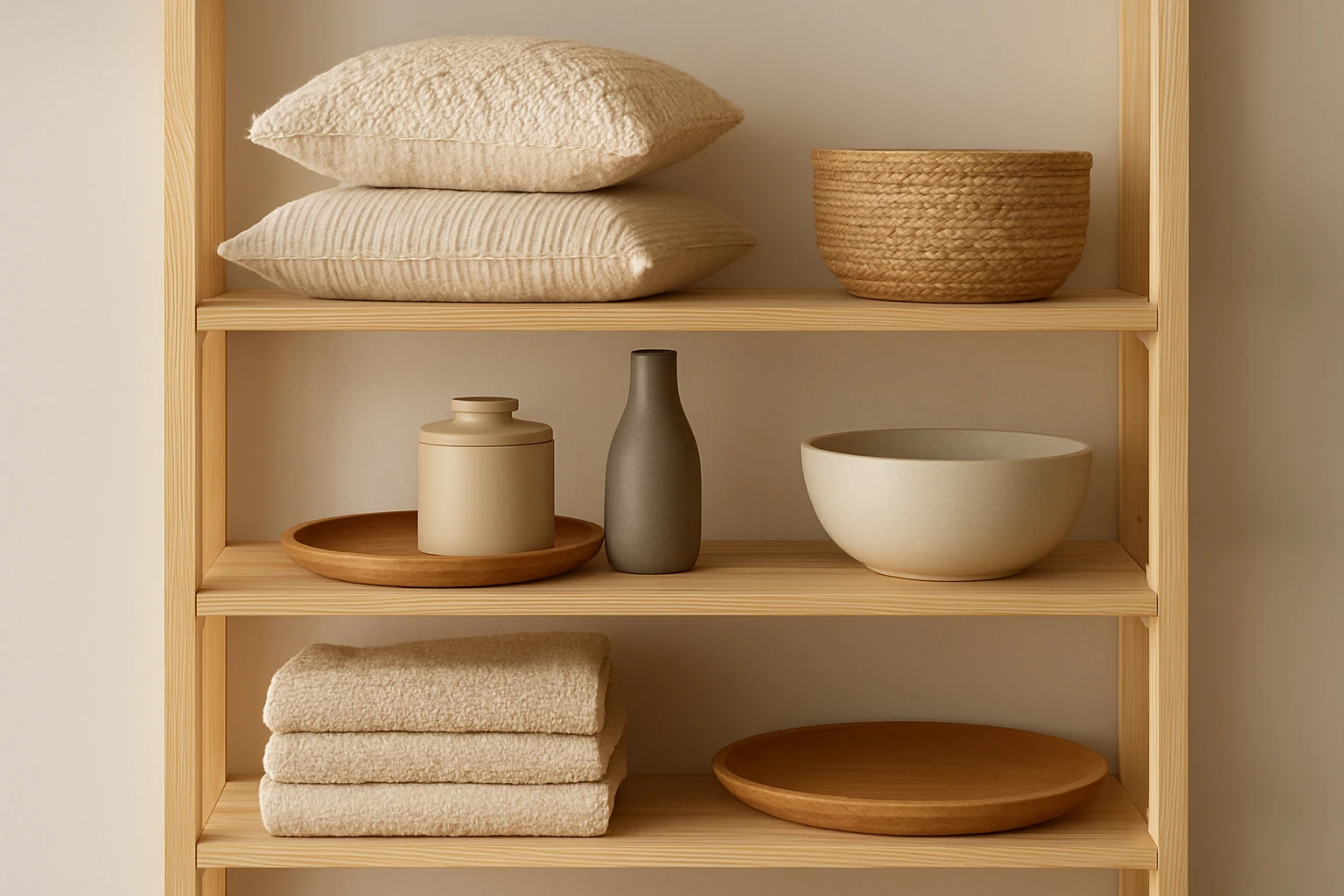
Quick take: Public Goods is the clean, membership-based pick. Best for shoppers who want simple everyday essentials and can justify the annual fee through repeat orders.
Best for minimal, refill-friendly basics
Public Goods frames its assortment around everyday essentials, and the product examples in the provided excerpt make that clear: dish soap, hand soap, shampoo, and conditioner sit front and center. This is not where you go to furnish a whole room. It is where you go when you want the boring but necessary items to be easy to reorder and visually consistent on the shelf.
That focus is a strength. A household in Seattle or Atlanta that keeps reordering the same bathroom and kitchen basics often wants less choice, not more. Public Goods answers that impulse with a streamlined range and a refill-friendly feel.
Best for members who reorder often
The offer is explicit. Public Goods says its $65 per year membership includes 20% off everything, free shipping on all US orders, a yearly $80 credit, and exclusive offers and perks. For a member who buys the same staples throughout the year, that math can make sense quickly.
Notice the wording, though: free shipping on all US orders. That makes this a stronger fit for US-based shoppers than for someone in Glasgow or Melbourne unless other shipping details work in your favor. For an American household that restocks hand soap, dish soap, and personal care regularly, the model is easy to understand.
Watch-outs: value depends on annual usage
Membership only works when you actually use it. If you place one order, admire the packaging, and forget the site for 10 months, the annual fee stops looking smart. The model rewards routine. It does not reward curiosity shopping.
Membership only pays off if you reorder the same basics more than once.
So treat Public Goods like a household system, not a one-time browse. If that sounds appealing, it is a tidy option. If you want decorative variety or a larger cart, start elsewhere.
#3 HomeGoods
Quick take: HomeGoods remains a powerful name for decor shoppers who love the treasure-hunt feel. Best for brand fans and bargain browsers — with a caution that the online path currently looks less dependable than a classic full-catalog retailer.
Best for bargain-hunting energy and decor browsing
HomeGoods has a very specific appeal. You go there for the chance find: the lamp you were not planning to buy, the oversized mirror that somehow works, the patterned throw pillow that lifts a plain sofa. That energy translates well to decor shoppers who enjoy browsing rather than checking off a precise spec sheet.
If your shopping style is more “show me interesting pieces” than “I need a 63-inch media console in walnut,” the brand still has pull. The name carries real home-decor recognition, and many shoppers already know the look they associate with it.
Best for shoppers who already know the brand
This is the kind of store that works best when you come in with context. If you have shopped the aisles before, you understand the appeal: eclectic mix, value-driven finds, and plenty of small decor items that feel like discoveries. That familiarity can compensate for a less structured online experience.
It also helps when your purchase is lighter and less risky — think tabletop pieces, frames, or accent decor rather than larger items that would be painful to return across borders.
Watch-outs: online experience can be inconsistent
The current search results supplied for this article are a warning sign. One HomeGoods-related result opens with “Something went wrong” followed by “Let’s get back on track.” Another result is labeled “Access Denied.” That does not automatically describe every shopper’s experience, but it does make the online shopping path feel less dependable than a standard e-commerce catalog.
A famous offline brand can still be a frustrating online experience.
If you are in the UK, Europe, or Australia and already juggling shipping questions, a brittle website is the last complication you need. HomeGoods still makes sense for treasure-hunt instincts. Just go in with patience.
#4 IKEA
Quick take: IKEA is the practical value play for modern furniture, storage, and whole-room planning on a budget. Best for first apartments, family rooms, and shoppers who think in measurements, not just mood boards.
Best for flat-pack furniture and modular storage
IKEA is widely known for flat-pack furniture and modular storage, and that reputation is exactly why it belongs here. When you need a bookcase, shoe storage, a dining table, or bedroom basics that follow a coherent modern look, IKEA usually gets you close fast. The catalog is broad enough to support full-room planning without losing its identity.
It is also one of the few places where storage feels like a design category, not an afterthought. That matters in smaller homes from Brooklyn to Brisbane, where a family room often needs to do three jobs at once.
Best for first apartments and family rooms
IKEA works especially well when you are furnishing from scratch. A first apartment in Manchester, a child’s room reset in Sydney, or a budget-conscious guest room in Chicago all benefit from its mix of affordability and coordination. You can often assemble a room concept — bed, shelving, lighting, textiles — without style whiplash between pages.
That makes IKEA less exciting than a boutique decor shop, but much more useful when the room is mostly empty and you need real function by Saturday.
Watch-outs: assembly and sizing still matter
There is no escaping the practical side. Flat-pack convenience still requires assembly tolerance, accurate room dimensions, and a sober look at stairwells, lifts, and entryways. Online, IKEA works best when you already know what a 160-centimeter table or a 40-centimeter shelf depth means in your actual space.
IKEA is most useful when you shop with a tape measure, not just a wish list.
If you skip that step, the price advantage can disappear into return hassle or a piece that never quite fits the corner beside the radiator.
#5 Wayfair

Quick take: Wayfair is the broad catalog pick for shoppers who want to browse room by room and compare budget bands in one search flow. Best for larger furniture plus decor when you already know the space you are solving.
Best for browsing by room and budget
Wayfair is widely known for a very large home-furnishings catalog, and its filters are a major part of the appeal. When you know you are shopping for a living room, patio, or dining area — not just vaguely “home stuff” — the site structure tends to help. You can narrow by style, size, finish, and price tier without bouncing across unrelated categories.
That makes it a practical choice for shoppers comparing several versions of the same thing: two coffee tables, three rugs, or four dining chairs in roughly the same footprint.
Best for larger furniture plus decor
Wayfair also works well when you want furniture and decor in the same session. You can move from sofa to side table to floor lamp without switching mental gears. For families planning a room refresh, that flow matters. It is easier to see whether the room hangs together when the browsing experience stays in one place.
Think of it as a room-builder’s tool. Not because it tells you your taste, but because it helps you compare compatible options quickly.
Watch-outs: big catalog means more comparison work
A large catalog is only helpful if you stay disciplined. You still need to watch dimensions, delivery timing, material descriptions, and return conditions — especially on big-ticket items. A chaise that looks perfect in a styled photo can still be too deep for a narrow London terrace room or too bulky for an apartment lift in Madrid.
Wayfair helps most when you already know the room and the size range you need.
If you have those details ready, Wayfair is efficient. If not, the very thing that makes it useful can also slow you down.
#6-#7 H&M Home and Zara Home
Quick take: H&M Home and Zara Home are the style-first options on this list. Best for shoppers who want decorative accessories, linens, candles, and tabletop pieces with a more curated, fashion-led point of view.
H&M Home: accessible style refreshes
H&M Home is widely known for bringing a fashion sensibility into small interiors purchases. That usually means trend-aware textiles, decorative accessories, tabletop pieces, and quick seasonal updates that do not require rebuilding a room from scratch. It is a strong stop when the sofa is staying, but the cushions, bedding, or dining setup need a reset.
For shoppers in Europe and the UK, that accessible style refresh is a real advantage. You can update a guest room, bathroom shelf, or entryway without treating the purchase like a full furnishing project.
Zara Home: elevated neutrals and decor accents
Zara Home plays in a similar style-led space, but with a more polished, neutral, editorial feel. If you are drawn to linen textures, ceramic accents, toned-down color palettes, and tabletop pieces that feel like finishing touches, Zara Home often looks more refined than a mass-market marketplace.
That does not automatically mean better value for every cart. It means the curation does more of the visual work for you. When you know you want the room to feel calm rather than crowded, that curation is worth something.
Best for smaller updates rather than full-room rebuilds
Both brands are especially appealing for smaller decor updates such as textiles, candles, and tabletop pieces. They are not the first places I would send a shopper planning an entire room at once, especially if the project includes major storage or larger furniture. For that, IKEA or Wayfair usually makes more sense.
| Store | Best use | Style note |
|---|---|---|
| H&M Home | Quick textile and accessory refreshes | Accessible, trend-aware, easy to mix |
| Zara Home | Accent pieces and tabletop finishing touches | Neutral, polished, more curated feel |
These stores are better for a stylish refresh than for buying an entire room at once.
That smaller-ticket pattern also lowers the risk for international shoppers. Returning a candle holder or pillow cover is usually simpler than returning a larger item. If you want new bedding, a tray, or a cleaner-looking table setup, both deserve a tab. If you need a whole storage wall, open different sites first.
How to choose the right option when you shop online
By this point, the pattern is clear: the best store is not automatically the biggest one. It is the one that matches your country, your cart, and your tolerance for returns. Here is the decision framework I would use on a Tuesday night with a half-filled cart and a calculator.
Choose by shipping region first
Start with the least glamorous question: does the store ship to your country cleanly, and what will delivery actually cost? For shoppers in the USA, UK, Europe, and Australia, country-specific shipping access should come before style browsing. If a site will not show delivery timing or realistic return terms until the final screen, move on.
Shipping is not a footnote. It is the purchase.
This matters most on bulky or fragile items. A set of tea towels can survive a clumsy checkout. A dining bench cannot. When the shipping line is messy, the best-looking product page in the world does not save the experience.
Choose by purchase type: essentials, furniture, or decor
Next, match the store to what you are actually buying. Marketplace for comparison. Membership brand for repeat basics. Curated shop for finishing touches. That simple sort will save you an hour.
| If you are buying... | Start here | Why |
|---|---|---|
| Mixed household items and quick comparisons | Amazon | Huge assortment and deep review volume |
| Repeat everyday essentials | Public Goods | Membership savings make sense on recurring orders |
| Decor treasure hunts | HomeGoods | Strong brand appeal for browse-led finds |
| Storage, basics, and budget room setups | IKEA | Practical modern furniture and modular planning |
| Room-by-room furniture and decor comparison | Wayfair | Broad catalog with helpful filters |
| Textiles, candles, and curated accents | H&M Home or Zara Home | Style-first updates without a full rebuild |
A good example: if you need a sofa, two bedside tables, and a rug for a flat in Dublin, start with Wayfair or IKEA. If you already have the furniture and just want new throws, bath towels, and a ceramic vase, H&M Home or Zara Home will feel more direct.
Choose by value model: one-off buy vs membership savings
Finally, decide whether this is a one-time purchase or the start of a repeat buying pattern. A membership only earns its place when you return often enough to justify the fee. A giant marketplace only helps when you are willing to do the comparison work. A curated store only pays off when you value curation enough to skip the endless scroll.
Before you hit pay, compare shipping and return terms one more time — especially for cross-border orders. That final check is where smart shopping usually beats impulse.
- Check shipping availability for your exact country first.
- Compare the full delivered price, not just the item price.
- Read the return window before buying larger or fragile pieces.
- Match the store type to the room problem you are solving.
The best store is the one that ships cleanly to your country and matches the kind of room you are actually shopping for.
The best online store is the one that fits your country, your budget, and the kind of room you are actually building.
If you want to shop online with fewer surprises, start with store type before style: Amazon for breadth, Public Goods for repeat basics, IKEA or Wayfair for bigger setups, and H&M Home or Zara Home for finishing touches.
What matters more for your next order — the lowest price on the page, the easiest delivery promise, or a look you will still like six months from now?
Additional Resources
Explore these authoritative resources to dive deeper into shop home goods store online.
Explore More With US MART NEW YORK
Shop men’s, women’s, and kids’ fashion, shoes, bags, jewelry, watches, beauty, electronics, home essentials, and more online with free shipping, free returns, and wholesale pricing.
Shop New Finds- Editorial team


